Over the past few years, one question has come up repeatedly in my conversations with architects, lighting designers and distributors:
“What exactly is tubular lighting?”
Interestingly, people are rarely asking about the cylindrical shape itself. What they really want to understand is why so many modern commercial projects are moving beyond conventional linear fixtures.
In this guide, I’ll explain why tubular lighting has become an increasingly important part of contemporary lighting design—and why it’s much more than simply a round light fixture.
Walk into a newly completed office, boutique hotel, university or premium retail space today, and you’ll probably notice something different. Many of the bulky rectangular luminaires that once dominated commercial interiors have been replaced by clean cylindrical forms that integrate naturally into the surrounding architecture.
This shift is about far more than aesthetics.
Over the past decade, commercial lighting has evolved from being purely functional to becoming an integral part of architectural design. Today, architects and lighting designers expect luminaires not only to deliver reliable illumination, but also to improve visual comfort, complement surrounding materials, simplify maintenance and contribute to the overall experience of a space.
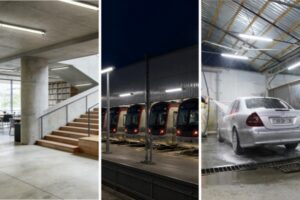
As a result, tubular lighting has become an increasingly common choice across a wide range of commercial projects—from contemporary offices and hospitality spaces to transportation infrastructure and demanding industrial environments.
Despite its growing popularity, the term tubular lighting is still widely misunderstood. It is often confused with LED tube lamps, fluorescent replacements or decorative pendant lights. In reality, tubular lighting represents a much broader category of luminaires, encompassing architectural, commercial and industrial solutions designed for very different performance requirements.
Rather than focusing on product specifications alone, this article explores why tubular lighting has become an increasingly popular choice in modern commercial architecture, how it differs from traditional linear fixtures, and what design principles have driven its rapid adoption.
Throughout this guide, we’ll focus on the thinking behind tubular lighting rather than simply defining the product itself.
Looking for a complete overview?
Start with our Ultimate Guide to Tubular Lighting, where we cover materials, IP ratings, applications, buying considerations, and more.
Commercial Lighting Is No Longer Just About Illumination
For decades, commercial lighting was driven primarily by functionality. Fluorescent battens and rectangular linear luminaires dominated offices, schools, warehouses and public buildings because they were efficient, economical and easy to maintain
As LED technology matured, lighting performance improved dramatically. Fixtures became more energy efficient, longer lasting and easier to control through systems such as DALI and 0–10V dimming. But improvements in efficiency alone were no longer enough.
Architects, lighting designers and building owners gradually began evaluating luminaires from a much broader perspective. Lighting was no longer expected to simply meet illuminance requirements—it also needed to enhance the architectural identity of a space, improve occupant comfort and remain visually relevant throughout the building’s lifecycle.
Instead of asking only:
“How many lux does this fixture provide?”
Design teams started asking different questions:
- Will the fixture complement the interior design?
- Does the luminaire create visual comfort instead of glare?
- Can it become part of the architectural expression?
- Will it remain visually timeless ten years from now?
- Is it suitable for challenging environments without compromising appearance?
These evolving project priorities have accelerated the adoption of tubular lighting across commercial architecture.
Rather than focusing solely on illumination, tubular luminaires combine optical performance, durable engineering, and architectural aesthetics within a simple cylindrical form. The result is a fixture that works equally well as a functional light source and as an architectural design element.
This design philosophy can be seen across many leading European lighting manufacturers. Companies such as Sammode have long used tubular luminaires in demanding industrial and transportation environments, while brands including Zumtobel, Fagerhult, iGuzzini, and BEGA continue to explore minimalist luminaire forms that integrate seamlessly with contemporary architecture. Although each manufacturer follows its own design language, the broader industry trend is clear: lighting is increasingly becoming part of the architecture itself, rather than equipment that is merely attached to it.
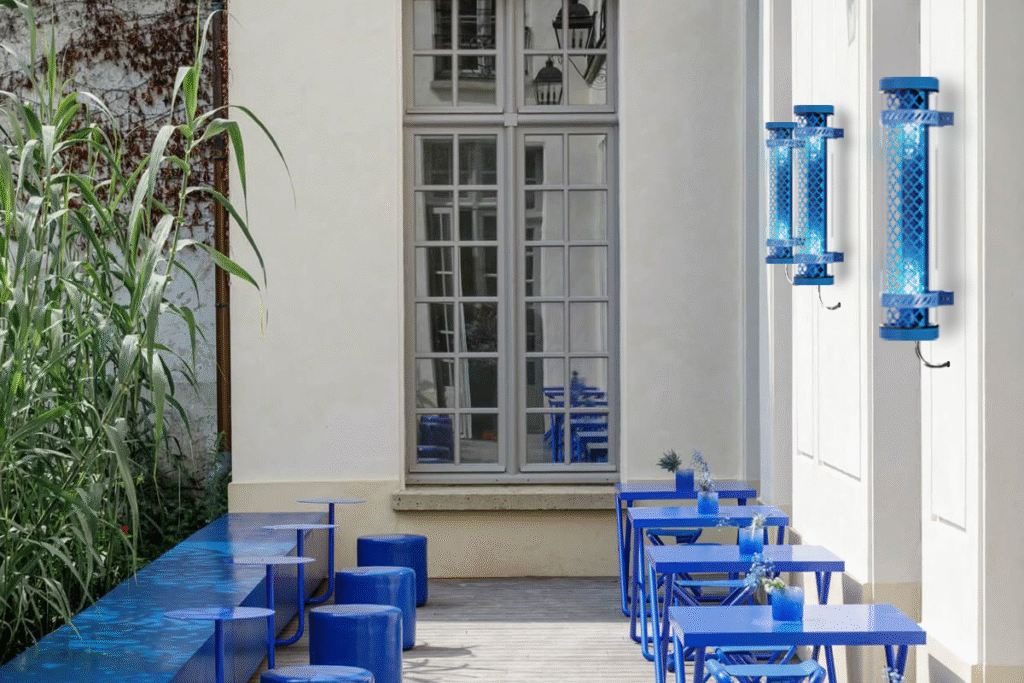
Tubular Lighting Is a Design System—Not Simply a Shape
At first glance, tubular lighting may appear to be nothing more than a cylindrical version of a conventional linear luminaire.
In practice, however, the tube itself is only the visible result of a much broader design philosophy.
A well-designed tubular luminaire balances several engineering objectives simultaneously:
- Uniform light distribution with minimal visible LED hotspots
- Comfortable visual appearance from multiple viewing angles
- Structural strength for commercial environments
- Flexible installation methods
- Long-term reliability in indoor or outdoor conditions
- A clean geometric form that complements contemporary architecture
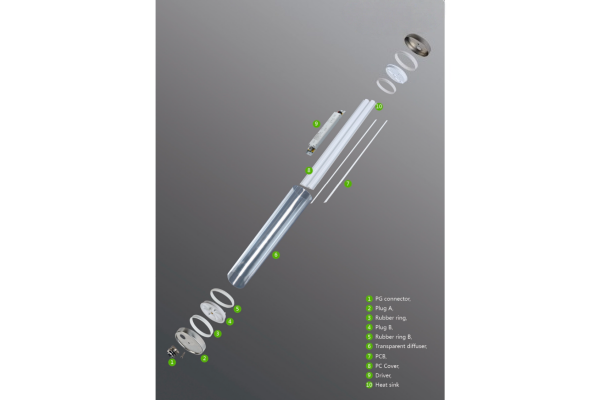
Unlike many conventional fixtures that prioritize only efficiency or installation cost, tubular lighting is often developed as a complete architectural system. The housing, diffuser, optical components, end caps, mounting accessories, and control options are designed together rather than treated as independent parts.
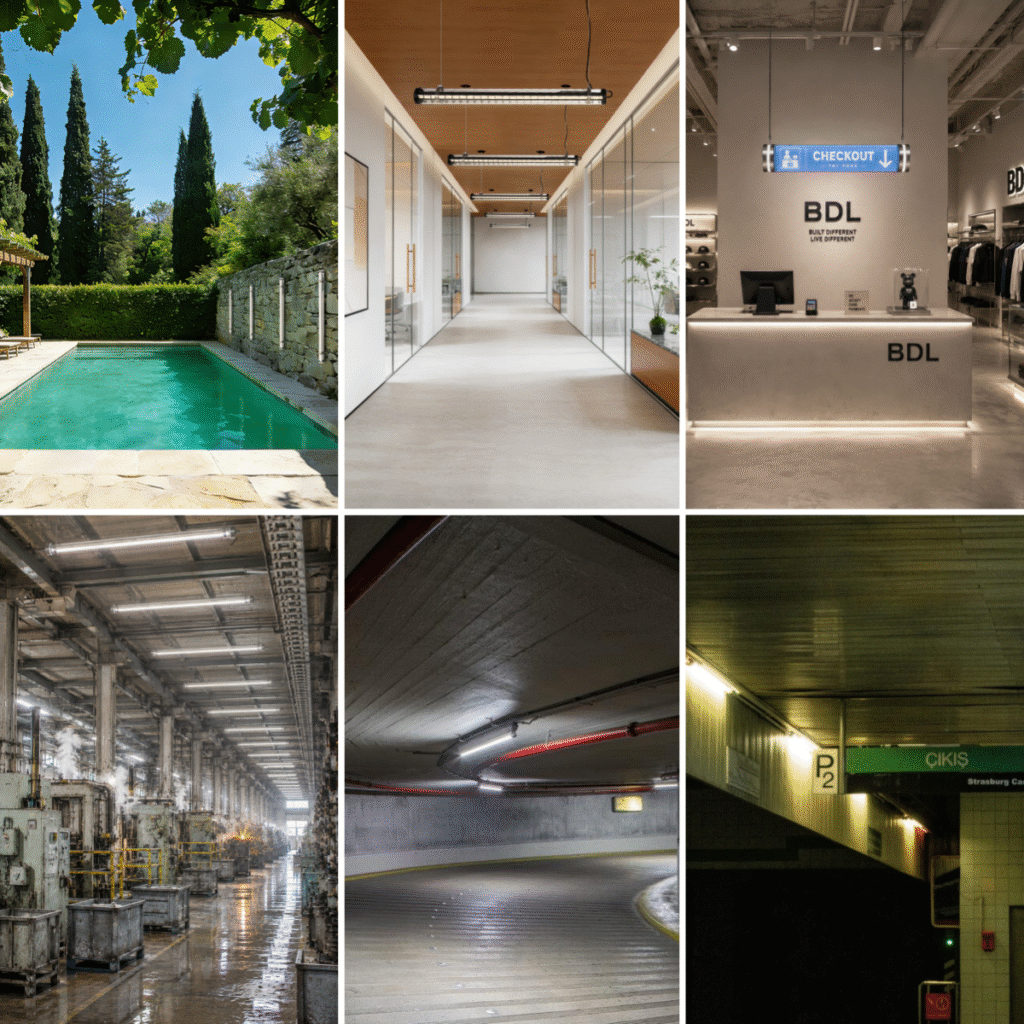
This holistic approach explains why tubular luminaires can be found in environments as different as hotel reception areas, university corridors, metro stations, underground parking garages, food factories, museums, and premium office spaces.
The cylindrical shape itself also provides practical engineering advantages. It distributes mechanical stress more evenly than flat housings, simplifies sealing for higher ingress protection ratings, and offers greater flexibility for creating direct, indirect, or even 360-degree illumination depending on the optical design.
In other words, tubular lighting should not be viewed as a single product—it is a versatile luminaire platform capable of serving architectural, commercial, and industrial applications through different optical, mechanical, and material configurations.
Why Are More Architects Choosing Tubular Lighting?
The popularity of tubular lighting is not simply the result of changing design trends. Instead, it reflects a shift in how commercial lighting is evaluated throughout the design process.
Today, architects, lighting designers and project consultants rarely select luminaires based on lumen output alone. Instead, they consider how a fixture contributes to the overall experience of a space—from visual comfort and architectural integration to maintenance, sustainability and lifecycle costs.
This explains why tubular luminaires are increasingly specified in projects where the lighting fixture is expected to remain visible rather than hidden.
Below are some of the key reasons behind this industry-wide transition.
1. Lighting Has Become Part of the Architecture
Traditional fluorescent battens and many conventional linear fixtures were designed to disappear into a ceiling or simply provide functional illumination.
Tubular lighting follows a different philosophy.
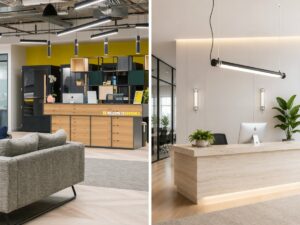
Instead of concealing the luminaire, architects often use it as part of the visual composition of a building. A suspended tubular luminaire can reinforce the rhythm of exposed ceilings, highlight circulation paths, or create clean geometric lines that complement materials such as timber, concrete, glass and steel.
In many modern projects, lighting is no longer treated as electrical equipment—it is considered part of the interior architecture.
This design approach is increasingly reflected in commercial offices, hospitality environments, educational buildings and premium retail spaces, where visible luminaires contribute to the overall identity of the project.
2. Better Visual Comfort Without Compromising Performance
One of the biggest challenges in commercial lighting is balancing illumination with visual comfort.
High-output luminaires can easily create uncomfortable glare if the emitting surface is too small or the optical design is poorly controlled.
Many tubular luminaires address this issue by combining cylindrical diffusers, optimized LED spacing and carefully designed optical systems to create a larger, more uniform luminous surface.
Rather than drawing attention to individual LED points, the fixture appears as a continuous illuminated tube with softer brightness transitions.
This approach helps improve perceived visual comfort in environments where occupants spend long periods of time, such as offices, universities, libraries and healthcare facilities.
Of course, glare performance ultimately depends on the optical design—not simply on the fixture being tubular. Lens selection, diffuser material, shielding angle and installation height all influence the final UGR performance.
3. Greater Freedom for Designers
Another reason tubular lighting has become increasingly popular is its design flexibility.
Unlike conventional rectangular luminaires that often offer limited visual variation, tubular systems can be configured in numerous ways while maintaining a consistent design language.
Common customization options include:
- Various diameters for different architectural scales
- Continuous lengths or modular systems
- Surface-mounted, suspended or wall-mounted installation
- Direct, indirect or 360° light distribution
- Multiple finishes, textures and colours
- Decorative internal elements such as louvers or metal mesh
- Intelligent lighting controls including DALI, 0–10V and wireless systems
This flexibility allows designers to adapt one lighting family across multiple areas within the same project while maintaining visual consistency.
For manufacturers, it also creates a scalable product platform rather than a collection of unrelated fixtures.
4. A Platform That Can Adapt to Different Environments
One common misconception is that tubular lighting is primarily decorative.
In reality, the same cylindrical design principle can be engineered for vastly different environments.
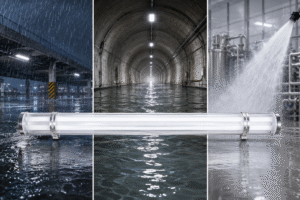
A decorative pendant installed in a hotel lobby and an IP69K tubular luminaire used in a food processing plant may look similar from a distance, yet their engineering requirements are completely different.
Depending on the application, tubular luminaires may incorporate:
- UV-resistant polycarbonate for impact protection
- PMMA diffusers for improved optical clarity
- Borosilicate glass for chemical resistance and thermal stability
- Marine-grade stainless steel hardware for corrosive environments
- Silicone sealing systems for high-pressure washdown applications
This versatility has allowed tubular lighting to expand beyond architectural projects into transportation, heavy industry, pharmaceutical facilities, clean rooms and food production environments.
In other words, “tubular” describes the overall form factor—not the performance level.
| Design Objective | How Tubular Lighting Supports It |
|---|---|
| Architectural Integration | Clean cylindrical forms integrate naturally with contemporary architecture and interior spaces. |
| Visual Comfort | A larger luminous surface helps create softer, more uniform illumination while reducing visible LED hotspots. |
| Design Flexibility | Available in multiple diameters, lengths, finishes and mounting configurations to suit different project requirements. |
| Optical Performance | Supports direct, indirect, asymmetric and 360° light distributions through different optical systems. |
| Environmental Adaptability | Can be engineered for environments ranging from office interiors to demanding IP69K industrial applications. |
| Long-Term Consistency | Product families maintain a unified architectural language across different areas of the same project. |
Tubular Lighting Is Not a Single Product Category
One of the most common misunderstandings in the lighting industry is treating tubular lighting as a single product.
In reality, tubular lighting is better understood as a luminaire platform rather than an individual fixture.
The cylindrical housing provides a common architectural language, but the optical system, construction materials, ingress protection, impact resistance and mounting methods can vary significantly depending on the project requirements.
For example, a suspended tubular luminaire specified for a corporate headquarters prioritizes visual comfort, aesthetics and seamless integration with the interior architecture. By contrast, a tubular fixture installed in a food processing facility is engineered to withstand frequent washdowns, aggressive cleaning chemicals and strict hygiene standards. Although both products share a similar cylindrical appearance, they are designed to solve entirely different challenges.
Understanding these distinctions helps avoid one of the most common specification mistakes: selecting a luminaire based solely on appearance without considering the environmental and operational requirements of the space.
This is why professional lighting manufacturers typically organize their tubular product ranges into several categories rather than offering a single universal solution.
| Tubular Lighting Platform | Primary Design Objective | Typical Project Types |
|---|---|---|
| Architectural Tubular Lighting | Prioritizes visual comfort, aesthetics and seamless integration with contemporary architecture. | Offices, museums, galleries and commercial interiors. |
| Commercial Tubular Lighting | Balances lighting performance, durability and maintenance efficiency. | Retail stores, schools, hospitality and healthcare facilities. |
| Industrial Tubular Lighting | Engineered for protection, reliability and long-term performance in harsh environments. | Factories, warehouses, food processing facilities, tunnels and transportation infrastructure. |
| Decorative Tubular Lighting | Focuses on ambience, architectural expression and interior design. | Hotels, restaurants, cafés and premium residential projects. |
Rather than asking, “Which tubular light should I choose?”, a better starting point is to ask:
“What environment is this luminaire expected to perform in?”
That question almost always leads to a more appropriate specification.
Next Step: Curious how tubular luminaires compare with conventional rectangular fixtures? Read our detailed guide on Tubular Lighting vs. Linear Lighting to understand the differences in performance, appearance and project suitability.
Tubular Lighting Is Not the Same as an LED Tube
One of the biggest sources of confusion is the terminology itself.
When people search for tubular lighting, search results often include T5 or T8 LED replacement tubes. While both products have a cylindrical shape, they are designed for completely different purposes.
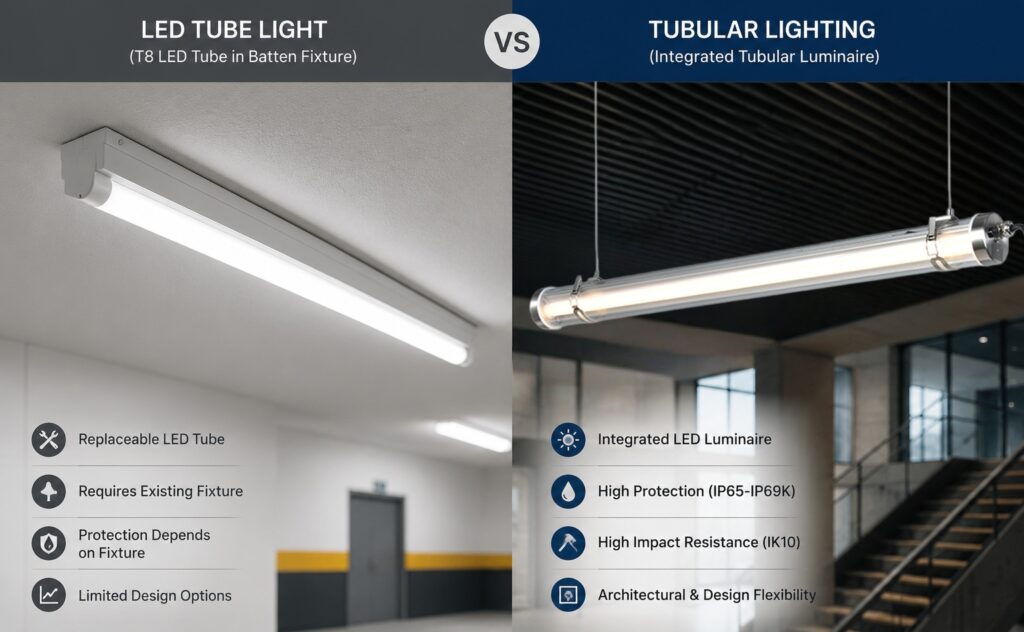
An LED tube is a replacement light source. It is intended to retrofit an existing fluorescent fixture by replacing the lamp while reusing the original housing.
A tubular luminaire, on the other hand, is a complete lighting fixture. It integrates the housing, optical system, LED module, driver, sealing structure and mounting accessories into a single engineered product.
The distinction becomes particularly important in commercial projects. A tubular luminaire is designed as part of the building’s lighting system, whereas an LED tube is simply one component within an existing fixture.
| Feature | Tubular Luminaire | LED Tube Lamp |
|---|---|---|
| Product Type | Complete lighting fixture | Replacement light source |
| Housing | Integrated housing and optical system | Reuses the existing fixture housing |
| Optical Design | Purpose-built optical system | Depends on the existing reflector and fixture design |
| Ingress Protection (IP) | Can be engineered from IP65 up to IP69K | Depends entirely on the existing fixture enclosure |
| Installation | Installed as a new luminaire system | Retrofits an existing fluorescent or LED fitting |
| Typical Applications | Commercial buildings, hospitality, industrial facilities and transportation projects | Fluorescent fixture upgrades and retrofit projects |
Understanding this distinction helps prevent specification errors, especially during renovations where both options may appear to achieve similar lighting outcomes but offer very different long-term performance.
Common Misconceptions About Tubular Lighting
Although tubular lighting has become increasingly popular, several misconceptions continue to influence purchasing decisions. Many of these assumptions come from early generations of decorative tubular fixtures that prioritized appearance over engineering performance.
Modern tubular luminaires have evolved considerably.
“Tubular lighting is only decorative.”
While decorative applications remain important, many tubular luminaires are now engineered for demanding commercial and industrial environments.
Depending on the design, they can achieve high ingress protection ratings, impact resistance, chemical resistance and compatibility with intelligent lighting controls, making them suitable for transportation infrastructure, manufacturing facilities and food processing plants as well as architectural interiors.
“A round fixture cannot deliver enough light.”
Light output depends on the LED package, thermal management, driver efficiency and optical design—not the external shape of the luminaire.
Today’s high-performance tubular fixtures can deliver luminous efficacy comparable to many conventional linear luminaires while maintaining a more refined architectural appearance.
“Tubular lighting is difficult to maintain.”
Maintenance requirements vary by manufacturer.
Many commercial-grade tubular luminaires are designed with modular drivers, replaceable mounting accessories and tool-free access to internal components, allowing routine servicing without replacing the entire fixture.
For facility managers responsible for large commercial buildings, maintainability often has a greater impact on lifecycle cost than the initial purchase price.
“Tubular fixtures are only suitable for indoor spaces.”
This is another common misconception.
With the appropriate housing materials, sealing systems and corrosion-resistant hardware, tubular luminaires are increasingly specified for outdoor walkways, parking structures, transportation facilities and coastal environments.
As always, the required IP rating and material selection should match the actual operating conditions rather than simply aiming for the highest specification.
Is Tubular Lighting the Right Choice for Your Project?
There is no single luminaire that is suitable for every project.
The best lighting solution always depends on the building, the people using the space and the long-term maintenance strategy.
Tubular lighting is often worth considering when a project requires more than basic illumination.
For example, it may be an appropriate choice if your project priorities include:
- Creating a clean architectural aesthetic with visible luminaires
- Improving visual comfort in occupied spaces
- Maintaining a consistent lighting language across multiple areas
- Combining durability with contemporary design
- Integrating dimming or smart lighting controls
- Reducing maintenance over the building’s lifecycle
- Meeting demanding environmental requirements without compromising appearance
Conversely, if the primary objective is simply to replace an existing fluorescent fitting at the lowest possible cost, a retrofit LED tube or a conventional utility luminaire may be the more practical solution.
The goal should never be to specify tubular lighting because it is fashionable. Instead, it should be selected when its engineering and architectural advantages genuinely support the objectives of the project.
Professional lighting specification is ultimately about choosing the right tool for the right environment—not selecting the newest product on the market.
Conclusion
Tubular lighting represents more than a different fixture shape. It reflects the evolution of commercial lighting from purely functional equipment toward integrated architectural elements that balance aesthetics, performance and long-term reliability.
Whether installed in a corporate office, a hotel, a university, a manufacturing facility or a transportation hub, a well-designed tubular luminaire should solve real project challenges rather than simply create visual impact.
Understanding the principles behind tubular lighting is the first step. Selecting the right materials, optical distribution, protection ratings and control systems is where successful projects are truly defined.
If you’re exploring tubular lighting for a commercial project, the next stage is understanding how it compares with more conventional lighting solutions and how different specifications influence long-term performance.
Continue Reading
To help you evaluate tubular lighting in greater depth, we’ve prepared a series of technical guides covering the topics most frequently discussed during commercial lighting projects.
- Ultimate Guide to Tubular Lighting
- Tubular Lighting vs. Linear Lighting: Which Is Better for Commercial Projects?
- Advantages and Disadvantages of Tubular Lighting
- How to Choose Tubular Lighting for Commercial Projects
- PC vs. PMMA vs. Borosilicate Glass: Which Material Performs Best?
- IP65 vs. IP67 vs. IP69K: Understanding Protection Ratings for Tubular Luminaires
- Can Tubular Lighting Replace Traditional LED Battens?