Lighting has changed dramatically over the past decade.
What was once considered a simple utility has become an important part of architecture, branding and user experience. Today’s lighting fixtures are expected not only to provide illumination, but also to withstand demanding environments, reduce maintenance costs and complement the overall design of a space.
This is one of the reasons tubular lighting has gained significant attention across commercial, architectural and industrial projects.
However, there is still considerable confusion surrounding the terminology. Many people searching for a tube light are actually looking for an LED replacement tube, while others are searching for a complete tubular lighting fixture. Although the names sound similar, they refer to very different products.
Understanding the difference is important because selecting the right luminaire affects far more than brightness. It influences installation, durability, maintenance, visual comfort and even the total cost of ownership over the life of a project.
In this guide, you’ll learn:
- What tubular lighting is
- How it differs from conventional LED tube lights
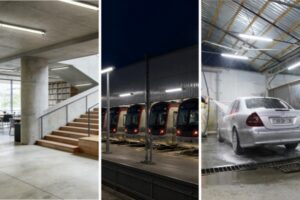
- Where tubular lighting is commonly used
- Why it has become increasingly popular
- How to choose the right tubular lighting solution
Whether you’re an architect, lighting designer, electrical contractor or project buyer, this guide provides a practical overview of tubular lighting and the key considerations when specifying it for commercial and industrial applications.
What Is Tubular Lighting?
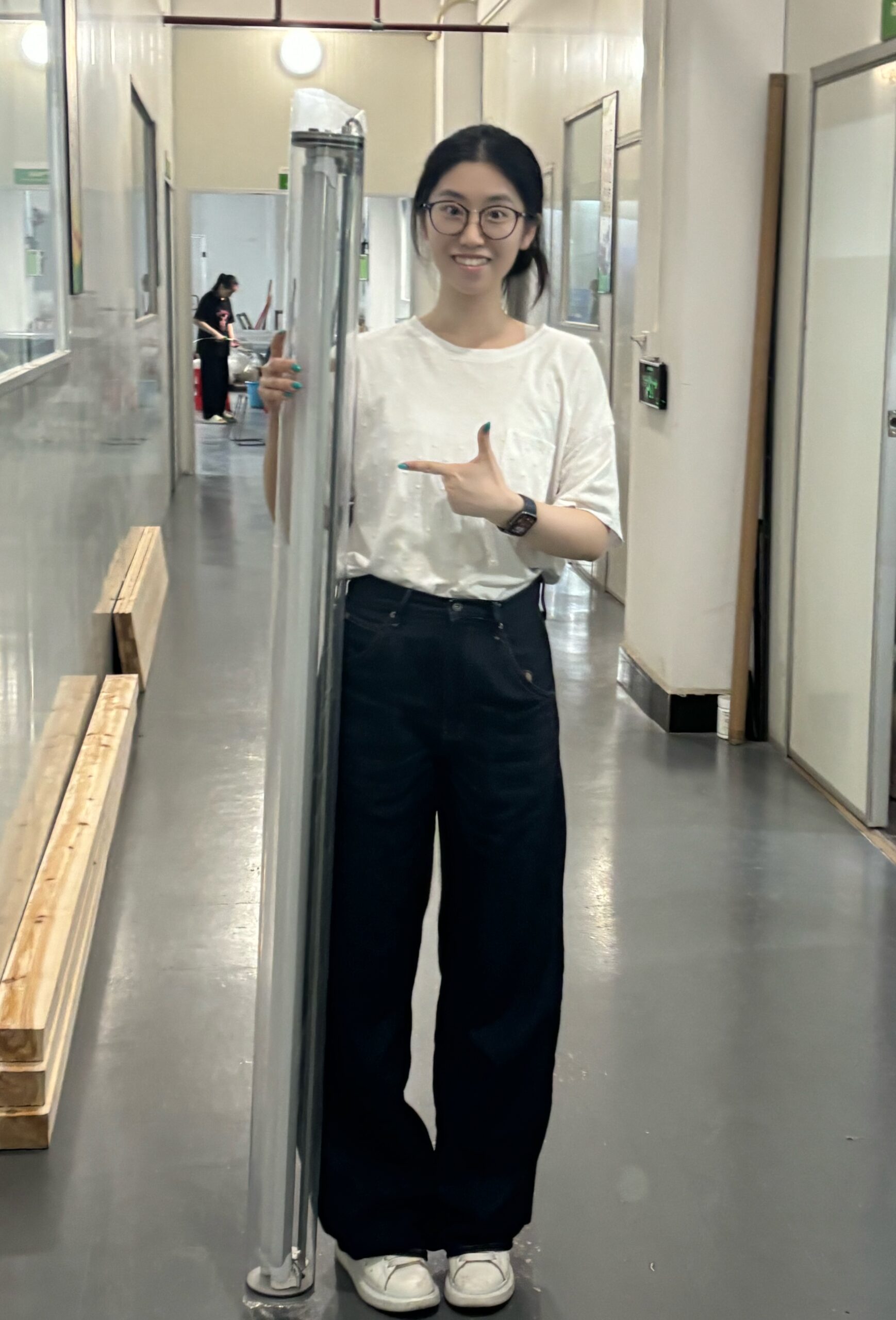
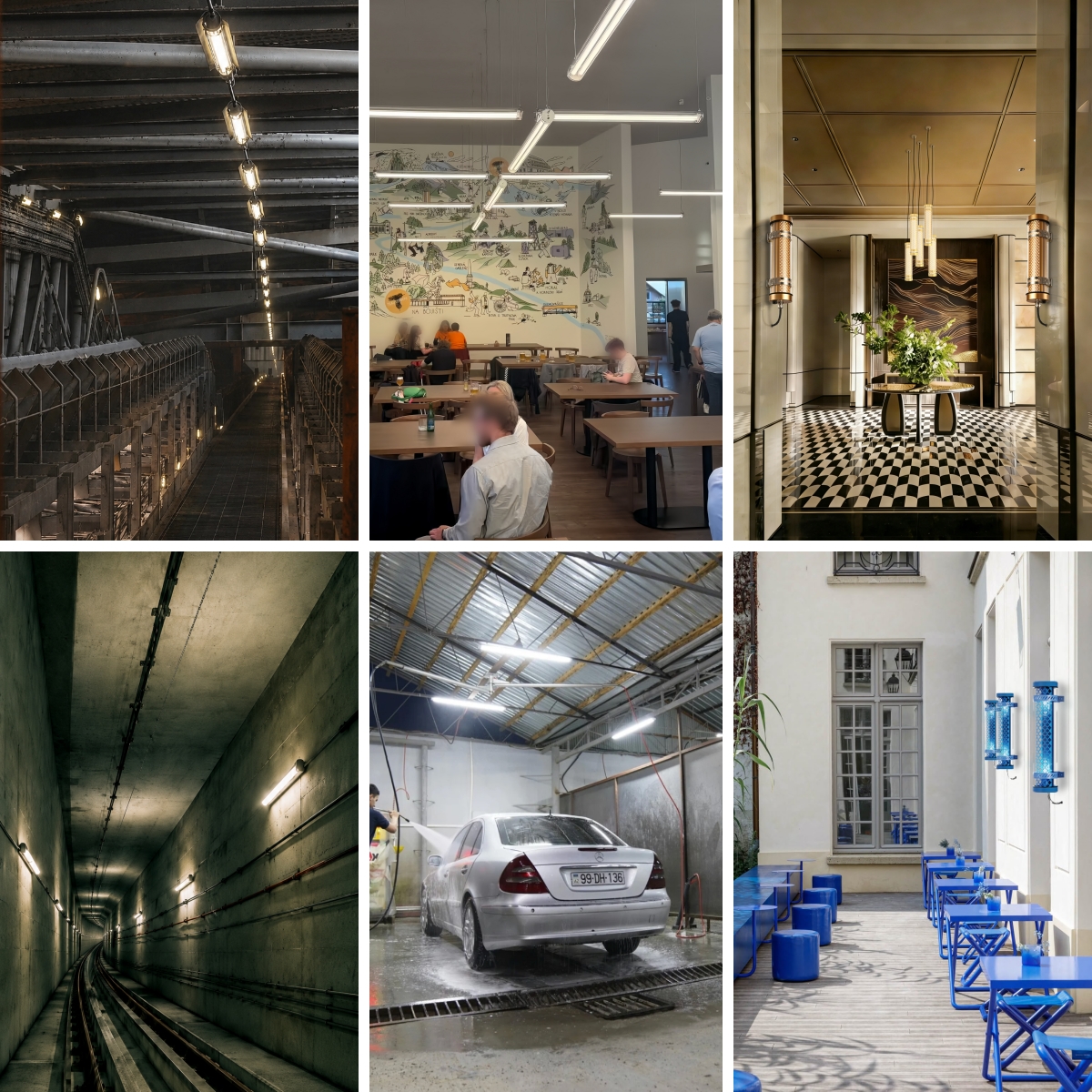
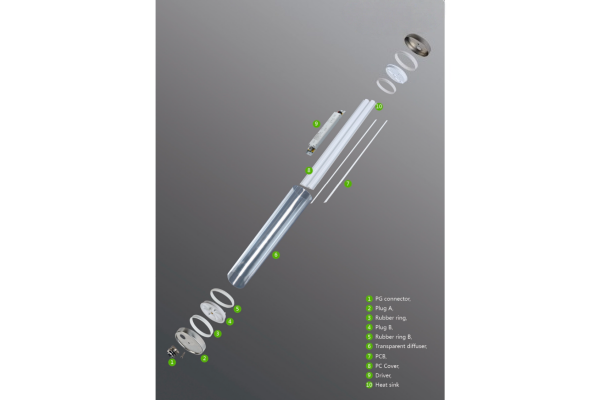
Tubular lighting refers to a complete LED luminaire built around a cylindrical housing. Unlike a traditional LED tube light, which is only a replaceable lamp, a tubular luminaire integrates the LED light source, driver, optics, housing and mounting system into one engineered fixture.
This integrated design provides greater flexibility in terms of protection, optical performance and installation. Depending on the application, tubular luminaires may be manufactured from polycarbonate (PC), PMMA (acrylic), borosilicate glass, aluminum or stainless steel, with various mounting methods and lighting distributions available.
Today, tubular lighting is used in a wide range of projects, including:
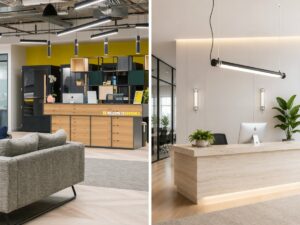
- Commercial offices
- Hotels and hospitality
- Retail stores
- Metro stations
- Parking garages
- Food processing plants
- Pharmaceutical facilities
- Warehouses
- Industrial factories
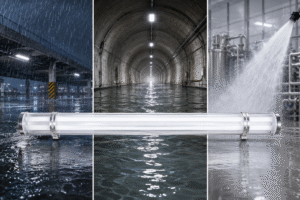
One of the biggest advantages of tubular lighting is its ability to combine modern architectural aesthetics with high environmental protection. Many products are available with IP65, IP67, IP68 or IP69K protection ratings and IK10 impact resistance, making them suitable for both decorative and demanding industrial environments.
Learn More
This article provides a broad introduction to tubular lighting. If you’d like a deeper explanation of how tubular luminaires are constructed, how they evolved and why they’re different from conventional lighting systems, read our complete guide to What Is Tubular Lighting?
Tubular Lighting vs. LED Tube Light
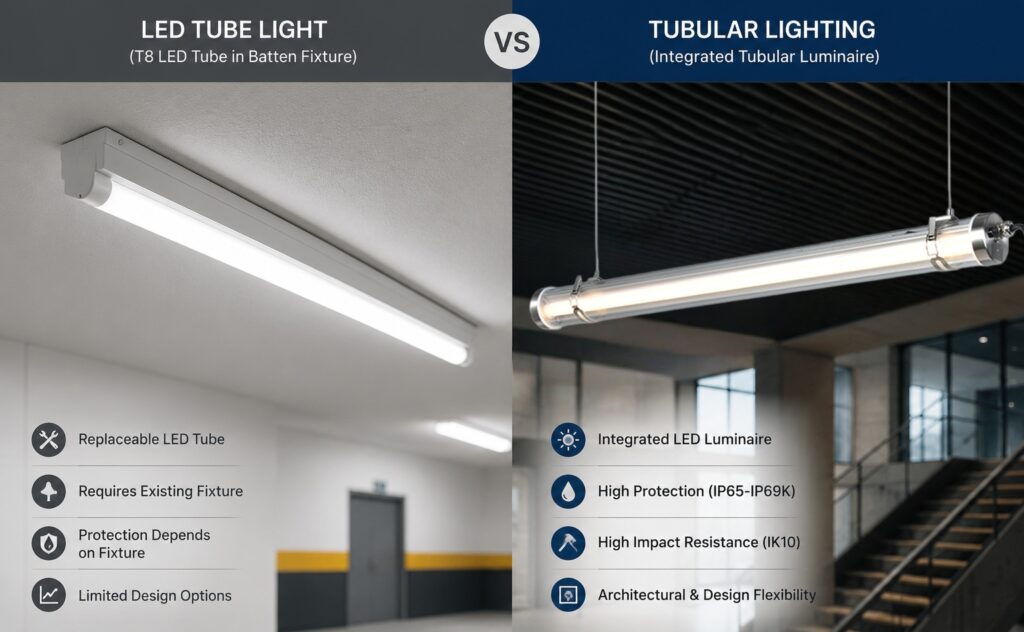
Although the terms are often used interchangeably, tubular lighting and LED tube lights are designed for different purposes.
An LED tube light is a replaceable lamp that fits into an existing fixture, typically replacing fluorescent T5 or T8 tubes. A tubular luminaire, on the other hand, is a complete lighting fixture designed as an integrated system.
This distinction becomes especially important in commercial and industrial projects, where factors such as waterproof performance, impact resistance, optical control and maintenance are determined by the luminaire—not just the light source.
Instead of simply replacing an old fluorescent tube, tubular lighting offers a complete solution that can be tailored to different architectural and environmental requirements.
| Feature | LED Tube Light | Tubular Lighting |
|---|---|---|
| Product Type | Replaceable LED lamp | Complete LED luminaire |
| Installation | Requires an existing fixture | Installed as a complete fixture |
| Protection Rating | Depends on the fixture | Typically IP65–IP69K |
| Impact Resistance | Limited | Up to IK10 |
| Customization | Very limited | Materials, optics, dimensions, finishes and controls |
| Typical Applications | Office retrofits, schools and warehouses | Commercial, architectural and industrial projects |
While LED tube lights and tubular luminaires are often confused, many projects also compare tubular lighting with conventional linear fixtures. If you’re evaluating both options, our detailed comparison explains the differences in performance, applications and design flexibility.
Why Is Tubular Lighting Becoming More Popular?
For many years, tubular luminaires were mainly associated with industrial environments. Today, they can be found in hotels, offices, retail stores, metro stations and even high-end residential projects.
This shift isn’t driven by aesthetics alone. As buildings become more complex and project owners place greater emphasis on durability, maintenance and sustainability, traditional lighting solutions are no longer suitable for every application.
Tubular lighting has gained popularity because it addresses several practical challenges while offering greater design flexibility.
1. It Combines Design with Durability
Traditional industrial fixtures are built to withstand harsh environments, while decorative luminaires are often designed with appearance as the priority.
Tubular lighting bridges this gap by combining both. Depending on the application, it can deliver high protection ratings while maintaining a clean, minimalist appearance that suits modern architectural spaces.
This is one reason why tubular luminaires are increasingly specified for commercial buildings, hospitality projects and public infrastructure.
2. Lower Maintenance Over the Product Lifetime
When evaluating lighting systems, the purchase price is only part of the equation.
In facilities such as parking garages, airports or manufacturing plants, replacing damaged fixtures can be expensive due to labor costs, equipment rental and operational downtime.
Because tubular luminaires are designed as integrated fixtures with robust housings and sealing systems, they often require less maintenance in demanding environments.
For many projects, a longer service life can provide greater value than a lower initial cost.
3. Greater Flexibility for Different Projects
Unlike standard LED tube lights, tubular luminaires can be configured to suit a wide variety of applications.
Common customization options include:
- Housing materials (PC, PMMA or borosilicate glass)
- Different diameters and lengths
- Surface, suspended or wall mounting
- Direct, indirect or 360° light distribution
- DALI, 0–10V or non-dimmable drivers
- Emergency lighting and motion sensors
This flexibility allows designers to specify lighting that matches both the functional and aesthetic requirements of a project.
4. Better Adapted to Modern Building Standards
Today’s projects are expected to meet higher standards for energy efficiency, sustainability and user comfort.
As a result, buyers are paying closer attention to factors such as glare control, lighting quality, durability and maintenance—not just lumen output.
Tubular lighting supports this trend by offering a wide range of optical options, control systems and protection levels that can be matched to different environments.
The growing popularity of tubular lighting can also be seen across the lighting industry. Manufacturers traditionally known for industrial tubular luminaires, such as Sammode, have expanded their collections into architectural and hospitality projects, while design brands like DCW éditions have demonstrated how tubular forms can become a defining architectural feature rather than simply a functional light source. This reflects a broader industry shift toward luminaires that combine performance with design rather than treating them as separate priorities.
Where Is Tubular Lighting Used?
One of the biggest strengths of tubular lighting is its versatility.
Rather than being limited to a single industry, tubular luminaires are now used in projects ranging from commercial interiors to heavy-duty industrial facilities. The most suitable solution depends on factors such as the environment, required protection level and lighting objectives.
| Application | Why Tubular Lighting? |
|---|---|
| Hotels & Hospitality | Decorative appearance with flexible mounting and lighting effects. |
| Commercial Offices | Modern aesthetics, glare control and comfortable illumination. |
| Retail Stores | Enhances product displays while complementing interior design. |
| Parking Garages | High IP and IK ratings with low maintenance requirements. |
| Metro Stations & Public Infrastructure | Durable construction for high-traffic environments. |
| Food & Beverage Processing | Washdown-resistant designs with hygienic, easy-to-clean surfaces. |
| Industrial Facilities | Reliable performance in dusty, humid or corrosive environments. |
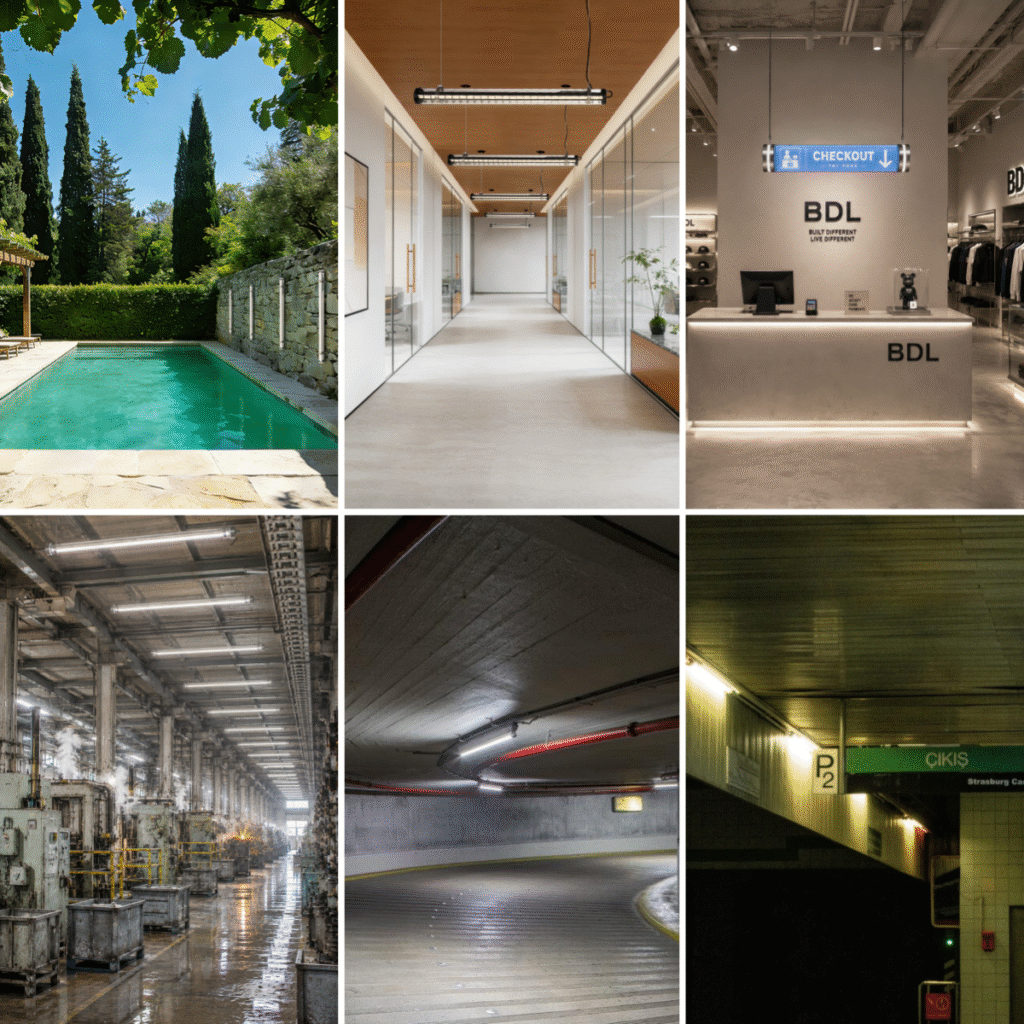
Every application has different lighting requirements. We also publish dedicated guides covering hospitality, parking garages, metro stations and food processing facilities.
- Tubular Lighting for Parking Garages
- Tubular Lighting for Metro Stations
- Tubular Lighting for Poultry Farms
- Tubular Lighting for Industrial Facilities
- Tubular Lighting for Residential Communities
- Tubular Lighting for Office Buildings
- Tubular Lighting for Hotels & Restaurants
- Tubular Lighting for Outdoor Areas
- Tubular Lighting for Retail Stores
How Lighting Professionals Specify Tubular Lighting
Choosing the right tubular lighting isn’t simply about selecting the highest lumen output or the lowest price.
In professional lighting projects, architects, lighting designers and engineers usually begin with the application rather than the fixture itself. The installation environment determines the material, protection level, optics and control system required for long-term performance.
The following five factors are typically considered during the specification process.
1. Start with the Environment, Not the Product
Every application presents different challenges.
For example, a hotel lobby prioritizes visual comfort and aesthetics, while a food processing plant requires resistance to water, chemicals and frequent washdowns.
Instead of asking “Which tubular light is the best?”, experienced designers ask:
“What does this environment require?”
Answering that question first makes the rest of the specification process much easier.
2. Select the Right Material
The housing material directly affects durability, maintenance and long-term reliability.
| Material | Best For | Key Advantages |
|---|---|---|
| Polycarbonate (PC) | Industrial & parking applications | Excellent impact resistance (up to IK10), UV resistance, lightweight and cost-effective. |
| PMMA (Acrylic) | Commercial & architectural lighting | Outstanding optical clarity and UV resistance. |
| Borosilicate Glass | Food, pharmaceutical and chemical facilities | Excellent chemical resistance and thermal shock performance. |
Choosing the right material isn’t about finding the “strongest” option—it’s about selecting the one that best matches the operating environment.
3. Match the Protection Rating to the Environment
Higher protection ratings aren’t always better.
A fixture installed in an office doesn’t require the same level of sealing as one installed in a food factory or outdoor tunnel.
Selecting the appropriate IP and IK ratings helps balance performance and project cost.
| Environment | Recommended Rating | Why |
|---|---|---|
| Office / Hotel | IP40–IP44 | Dry indoor environments with minimal exposure to dust or water. |
| Retail / Commercial | IP54–IP65 | Suitable for general commercial areas requiring moderate protection. |
| Parking Garage | IP65–IP67 + IK10 | Resistant to dust, humidity and accidental impacts. |
| Food Processing | IP69K | Designed for frequent high-pressure washdown and hygienic environments. |
| Outdoor Industrial | IP67–IP69K | Withstands rain, dust and harsh outdoor conditions. |
Specification Tip
Avoid selecting IP69K simply because it represents the highest rating. In many indoor applications, an IP65 luminaire already provides sufficient protection while reducing unnecessary costs.
Still unsure which protection level your project requires? Our detailed guide compares IP65, IP67 and IP69K tubular lighting and explains where each rating is most appropriate.
4. Don’t Focus Only on Lumens
Brightness is only one part of lighting quality.
Professional specifications also consider:
- Color temperature (CCT) to match the intended atmosphere
- CRI for accurate color rendering
- UGR to improve visual comfort
- Beam distribution for the application
- Dimming compatibility (DALI, 0–10V or TRIAC)
- Emergency lighting where required
The goal is not to maximize output, but to deliver the right light for the space.
5. Consider the Total Cost of Ownership
The purchase price is only one part of a luminaire’s lifecycle cost.
For commercial and industrial projects, long-term expenses such as maintenance, replacement frequency and installation downtime often have a greater financial impact than the initial investment.
A well-designed tubular luminaire may cost more upfront than a standard LED tube light, but it can significantly reduce maintenance requirements over many years of operation.
For this reason, experienced project teams evaluate total cost of ownership (TCO) rather than unit price alone.
The Future of Tubular Lighting
The role of tubular lighting continues to evolve.
While tubular luminaires were once primarily associated with industrial environments, they are now increasingly specified in commercial buildings, hospitality projects and public spaces. Architects and lighting designers are no longer choosing them solely for durability—they also value their clean geometry, design flexibility and ability to integrate seamlessly into modern architecture.
Looking ahead, several trends are shaping the future of tubular lighting:
- Smarter control systems, including DALI-2 and wireless lighting controls.
- Lower glare optics to improve visual comfort in offices, schools and hospitality environments.
- More sustainable materials and energy-efficient LED technologies.
- Greater customization, allowing luminaires to better match architectural concepts and project-specific requirements.
Rather than replacing every conventional LED tube light, tubular luminaires have established themselves as a distinct category of professional lighting. As projects continue to demand higher performance, longer service life and better design integration, tubular lighting is expected to play an increasingly important role in both architectural and industrial applications.
Frequently Asked Questions
Is tubular lighting the same as an LED tube light?
No. An LED tube light is a replaceable lamp designed to fit inside an existing fixture. Tubular lighting refers to a complete luminaire with an integrated housing, optics, driver and mounting system. It is designed to provide better protection, greater flexibility and improved long-term performance.
Where is tubular lighting commonly used?
Tubular lighting is widely used in hotels, offices, retail stores, metro stations, parking garages, food processing plants, warehouses and industrial facilities. The most suitable solution depends on the environment, protection requirements and lighting objectives.
Which material should I choose?
There is no universal best choice.
- PC is ideal when impact resistance is the priority.
- PMMA offers excellent light transmission and UV stability for commercial and architectural applications.
- Borosilicate glass is well suited to chemically aggressive or high-temperature environments, such as food processing and laboratories.
The best material always depends on the application.
What IP rating do I need?
Select the IP rating according to the installation environment.
For example, an office may only require IP40–IP44, while parking garages often use IP65–IP67. Food processing and washdown areas may require IP69K. Choosing the appropriate rating helps balance protection and cost.
What IP rating do I need?
Select the IP rating according to the installation environment.
For example, an office may only require IP40–IP44, while parking garages often use IP65–IP67. Food processing and washdown areas may require IP69K. Choosing the appropriate rating helps balance protection and cost.
Can tubular lighting be customized?
Yes. Many tubular luminaires can be customized in terms of housing material, dimensions, finishes, optics, mounting methods, beam distribution, color temperature, dimming protocol and emergency lighting to meet specific project requirements.
Conclusion
Although tube light and tubular lighting are often used interchangeably, they describe different types of lighting products.
A traditional LED tube light is primarily a replacement lamp, while a tubular luminaire is a complete lighting system designed to deliver durability, lighting quality and architectural integration.
As commercial and industrial projects continue to demand higher performance, lower maintenance and greater design flexibility, tubular lighting has become an increasingly popular solution across a wide range of applications.
Whether you’re specifying lighting for a hotel, parking garage, food processing plant or commercial office, the right choice begins with understanding the environment, selecting appropriate materials and protection levels, and considering long-term performance rather than upfront cost alone.
By following these principles, architects, engineers and project teams can select tubular lighting solutions that deliver reliable performance and lasting value throughout the life of the project.
References and Future Reading
- International Electrotechnical Commission (IEC). Ingress Protection (IP) Ratings — IEC 60529. https://www.iec.ch/ip-ratings
- International Electrotechnical Commission (IEC). IEC 62262: Degrees of Protection Against External Mechanical Impacts (IK Code). https://webstore.iec.ch/en/publication/71109
- DALI Alliance. DALI-2 and the IEC 62386 International Standard. https://www.dali-alliance.org/standards/IEC62386.html
-
Illuminating Engineering Society (IES).
Lighting Standards and Professional Resources.
Standards
- Chartered Institution of Building Services Engineers (CIBSE). LG7: Lighting for Offices. https://www.cibse.org/knowledge-research/knowledge-portal/lg7-lighting-for-offices-2023/