
PC vs PMMA vs Borosilicate Glass for Tubular Lighting: Which Material Should You Choose?
The tubular housing is one of the most visible parts of a tubular luminaire, but its role goes far beyond
Parking garages are demanding environments for LED lighting. Fixtures may face humidity, dust, vehicle exhaust, cleaning chemicals, vibration, accidental impact, and long operating hours. If you choose only by wattage, lumen output, or unit price, the lighting system may look acceptable at the beginning but fail early in real use.
The best way to choose an LED tri-proof light for a parking garage is to assess the real application risks first. You need to understand the moisture level, dust exposure, chemical environment, impact risk, installation method, and maintenance expectations. Then you can match the fixture’s IP rating[1], IK rating[2], housing material, gasket design, optical performance, and control options to the project conditions.
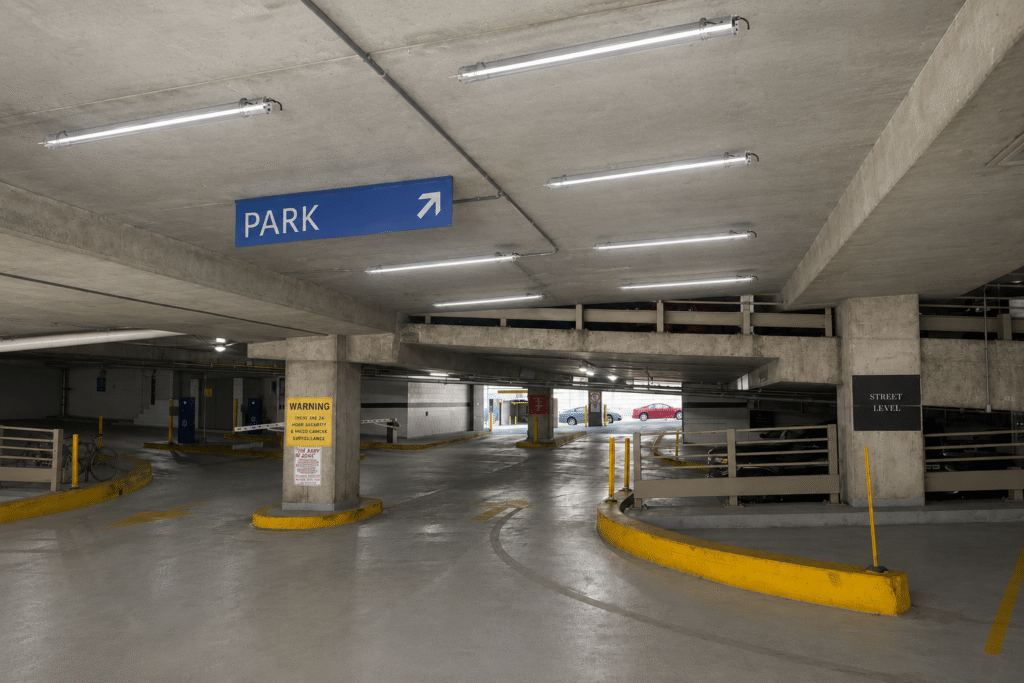
Based on our experience in industrial and project lighting applications, one common mistake is asking for the “best” light before defining the environment. A good fixture in one parking garage may not be suitable for another. An underground garage, an open-air car park, a coastal facility, and a high-traffic commercial parking area all have different lighting risks.
This guide explains how to evaluate LED tri-proof lights for parking garage projects from a practical B2B perspective.
Many buyers start by comparing power, lumens, IP rating, and price. These specifications are important, but they are not enough. Before choosing a parking garage LED lighting solution, you should first ask: what are the main risks in this project?
Is the garage underground with poor ventilation and vehicle exhaust? Is it open to rain, sunlight, and temperature changes? Is it located near the coast with salt spray? Will the lights be cleaned with water or chemical detergents? Is there a risk of vandalism or accidental impact?
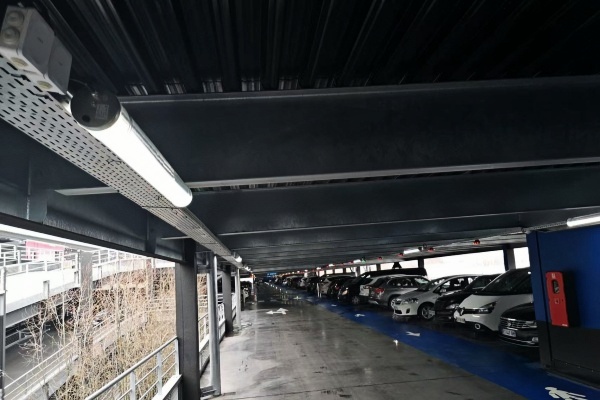
In my experience delivering lighting solutions, the conversation must start with the environment. A parking garage isn’t a single type of space. The risks in an underground facility in a dry, inland city are completely different from an above-ground garage at a coastal airport. Asking for a single “best” light ignores this critical context. Your first step should always be a risk assessment. I encourage my clients to think like an insurance adjuster. What could go wrong here? Let’s break down the most common risk factors.
The specific location and design of your garage will determine which threats are most important to address.
| Risk Factor | Key Challenges | Why It Matters for Your Lights |
|---|---|---|
| Moisture | Rain, humidity, condensation, high-pressure washing | Water ingress can cause short circuits and component failure. Constant humidity can corrode internal parts over time. |
| Dust & Dirt | Airborne particles from traffic and surroundings | Dust buildup can reduce light output, cause overheating, and penetrate weak seals, damaging the electronics inside. |
| Chemicals | Vehicle exhaust fumes, cleaning agents, salt spray | Aggressive chemicals can degrade plastic housings, making them brittle and yellow. They can also compromise rubber gaskets, leading to seal failure. |
| Impact | Vandalism, accidental bumps from vehicles or equipment | A low impact rating means a fixture can easily break, creating a safety hazard and requiring immediate replacement. |
| UV Radiation | Direct sunlight in open-air or top-level garages | Ultraviolet radiation can cause low-quality plastic housings and lenses to become yellow and brittle, reducing light output and structural integrity. |
By identifying your top 2-3 risks from this list, you move from a vague search for the “best light” to a targeted search for a durable solution.
You see a fixture with a high IP67 and IK10 rating and think it’s perfect. But you worry about hidden weaknesses that datasheets don’t show. Let’s look deeper than the numbers.
High ratings are a necessary starting point, but they do not guarantee long-term durability.
For parking garage LED tri-proof lights, the real performance depends on the material quality, sealing structure, gasket design, driver reliability, thermal management, and long-term resistance to UV, chemicals, and temperature changes.
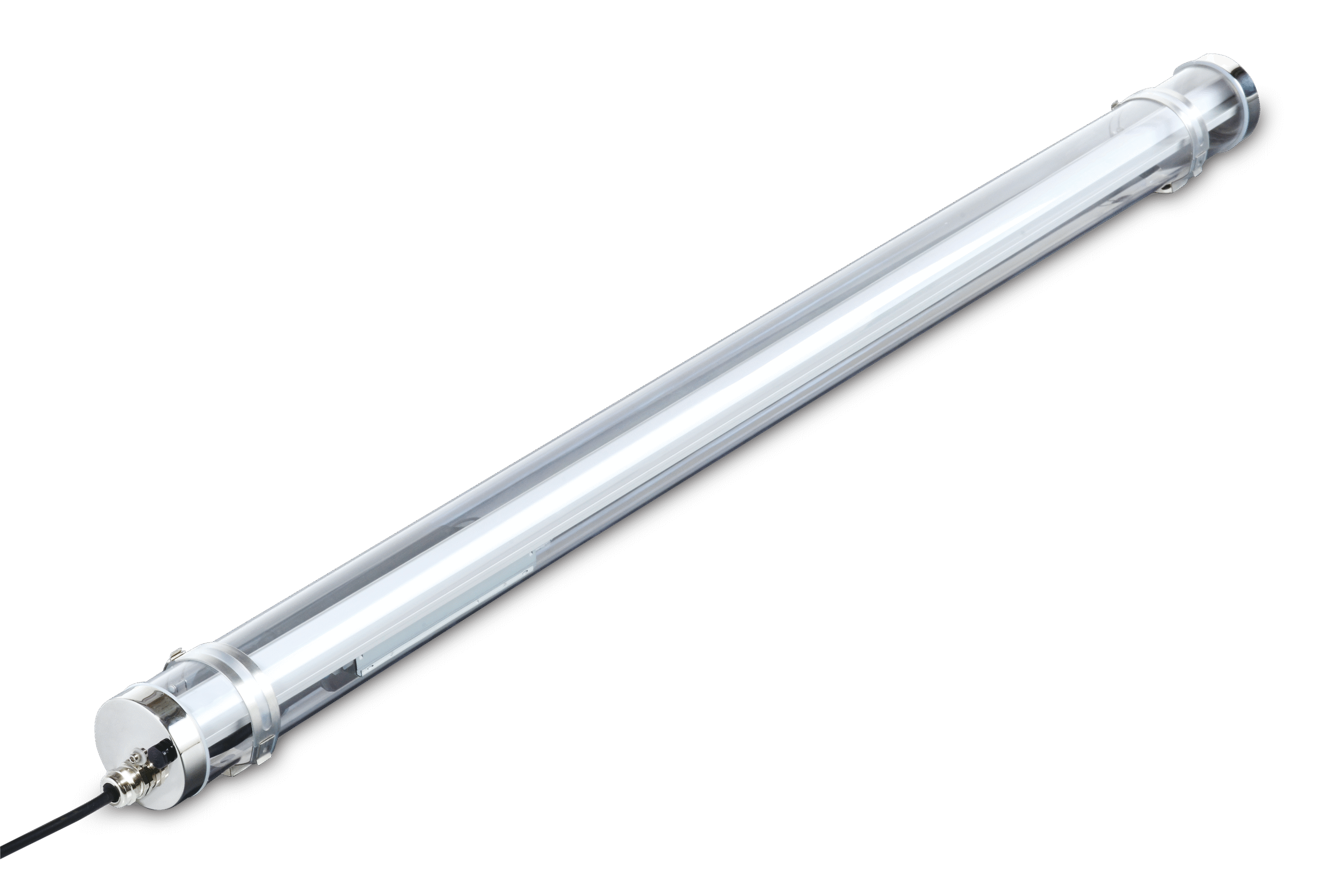
A common issue we see in after-sales feedback is premature failure in lights that had great specs on paper. An IP or IK rating is a test performed on a new product in a controlled lab. It doesn’t tell you how that product will perform after three years of exposure to UV rays, temperature cycles, and chemical fumes. True durability comes from the choices the manufacturer makes about the materials. These are the details that separate a product that lasts 10 years from one that fails in 2.
The housing is the light’s first line of defense. In a parking garage, it has to deal with impact, dust, moisture, exhaust fumes, cleaning agents, and sometimes direct sunlight. This is why the material choice matters.
However, standard PC may be affected by UV radiation and certain chemical substances. If the fixture is used in an open-air car park or a chemically aggressive environment, the PC material should have suitable UV resistance and chemical resistance.
Some manufacturers only offer one housing material, but that is not always enough for real parking garage projects. A closed underground garage, an open-air garage, and a coastal parking facility may need different material strategies. The key is to ask the supplier why they chose that material, what IK rating it can achieve, and whether it is suitable for your garage’s actual risks.
The gasket is critical for maintaining the IP rating. Even if the housing material is strong, poor sealing can still lead to water ingress, condensation, dust accumulation, and internal corrosion.
A high IP rating is meaningless if the gasket material can’t maintain the seal in real-world conditions.
You’re tempted by a low-priced fixture to stay under budget. But you fear that this “deal” will lead to expensive maintenance and replacements down the line. It’s time to calculate the real cost.
The true cost is the Total Cost of Ownership (TCO), not the purchase price. This includes the initial cost, plus energy consumption over its lifespan, and expected maintenance or replacement costs. A slightly more expensive but reliable fixture often has a much lower TCO.
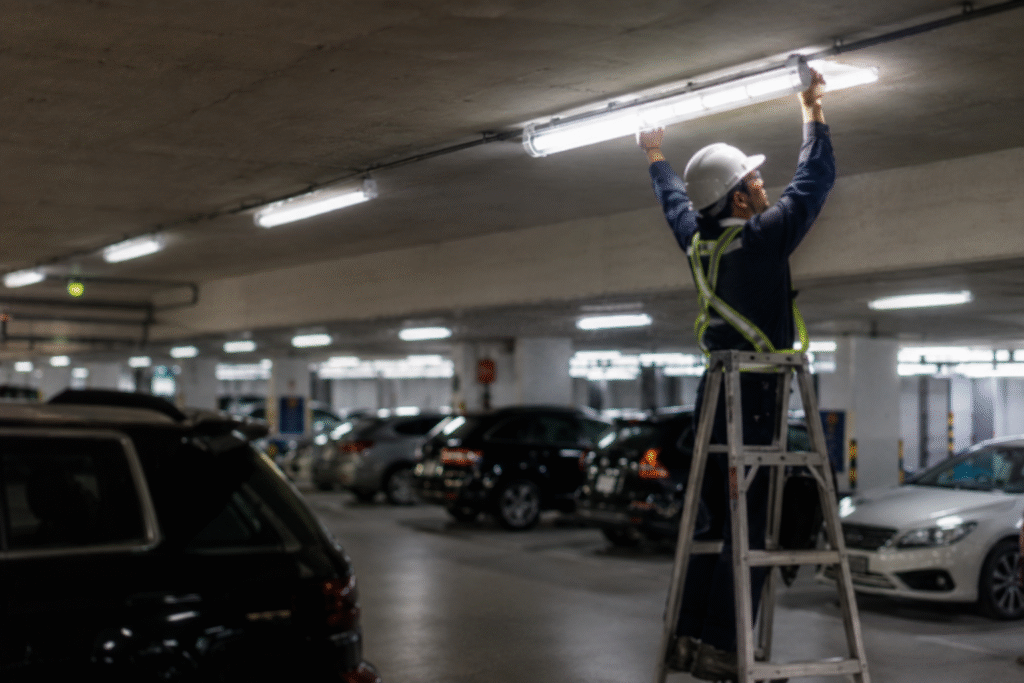
When I talk with project contractors, the budget is always a major topic. I understand the pressure to keep initial costs down. However, for a long-life asset like a parking garage, focusing only on the purchase price is a big mistake. The money you save today can be spent ten times over on maintenance, replacements, and dealing with safety issues. The smart way to evaluate cost is by looking at the Total Cost of Ownership (TCO) over the expected life of the system, which is typically 5-10 years[4].
Let’s compare two hypothetical fixtures over a 5-year period for a 100-light installation.
| Cost Factor | Fixture A (Low Price) | Fixture B (Quality) | Notes |
|---|---|---|---|
| Purchase Price per Unit | $30 | $50 | Fixture B is 66% more expensive upfront. |
| Total Upfront Cost | $3,000 | $5,000 | Based on 100 pcs. |
| Energy Efficiency | 100 lm/W | 150 lm/W | Fixture B is 33% more efficient. |
| Est. 5-Year Energy Cost | $13,140 | $9,855 | Assuming 24/7 operation at $0.15/kWh. |
| Expected Failure Rate | 15% (15 units) | 2% (2 units) | Based on lower quality materials in Fixture A. |
| Replacement Cost (Parts + Labor) | $2,250 | $300 | Assuming $100 labor per replacement. |
| Total 5-Year Cost (TCO) | $18,390 | $15,155 | Fixture B is over $3,200 cheaper in the long run. |
This example shows why the cheapest fixture is not always the most economical choice. In a real project, the numbers will depend on wattage, electricity price, operation hours, labor cost, and maintenance access. However, the principle is the same: long-term reliability and efficiency often matter more than initial unit price.
The table above doesn’t even include the biggest hidden costs. What is the cost of a dark, unsafe area in your garage? It could be a security incident, a customer complaint, or an accident. What is the cost of having your maintenance team constantly on call to replace failed lights instead of doing proactive work? A reliable lighting system provides peace of mind and predictable operational costs. That’s why investing a little more in a quality fixture with a lower TCO is almost always the smarter business decision.
A parking garage does not only need brightness. It needs the right light distribution, visual comfort, and uniformity. If the light is too concentrated, the floor may have bright spots and dark zones. If glare is too strong, drivers and pedestrians may feel uncomfortable or unsafe.
For parking spaces, drive lanes, ramps, entrances, pedestrian routes, and payment areas, the lighting requirements may be different. A good parking garage lighting design should consider both average illuminance and uniformity.
Lumen output determines how much light the fixture produces, but it does not show how the light is distributed.
Beam angle affects the spacing between fixtures and the uniformity on the ground.
Glare control is important in low-ceiling parking garages, ramps, and pedestrian areas. Diffusers, frosted covers, louver designs, or optical lenses can help improve visual comfort.
Color temperature is usually selected according to the project atmosphere and visibility requirements. Common options include 3000K, 4000K, and 5000K. For most parking garages, 4000K is a balanced choice because it provides clear visibility without looking too cold.
CRI affects how naturally colors appear. For parking garages, CRI 80 is commonly used and is usually sufficient for vehicle and pedestrian visibility.
If the project requires accurate lighting performance, IES files should be used for lighting simulation[3]. This helps confirm fixture quantity, spacing, mounting height, average lux level, and uniformity before installation.
Parking garages often do not need full brightness at all times. With suitable control options, the lighting system can reduce energy consumption while maintaining safety.
Common control options include motion sensors, daylight sensors, 0–10V dimming, DALI dimming, corridor function, and emergency lighting compatibility.
For low-traffic areas, sensor control can keep the lights at a lower standby level and increase brightness when movement is detected. This is useful for residential garages, storage parking areas, and sections with irregular traffic.
For commercial or public parking garages, DALI or 0–10V dimming can provide more flexible lighting management. Different zones can be controlled separately, such as entrances, ramps, drive lanes, stairwells, and parking areas.
Emergency lighting is also important in many parking garage projects. Some fixtures may need emergency battery backup, or the project may require a separate emergency lighting system. The supplier should confirm whether the fixture can support emergency function, through-wiring, or integration with the project’s emergency system.
A good product is important, but the supplier behind the product is equally important. Parking garage lighting projects often involve technical requirements, installation details, lead time control, quality inspection, and after-sales support.
A reliable supplier should not only provide a datasheet. They should help you understand whether the product is suitable for your project conditions.
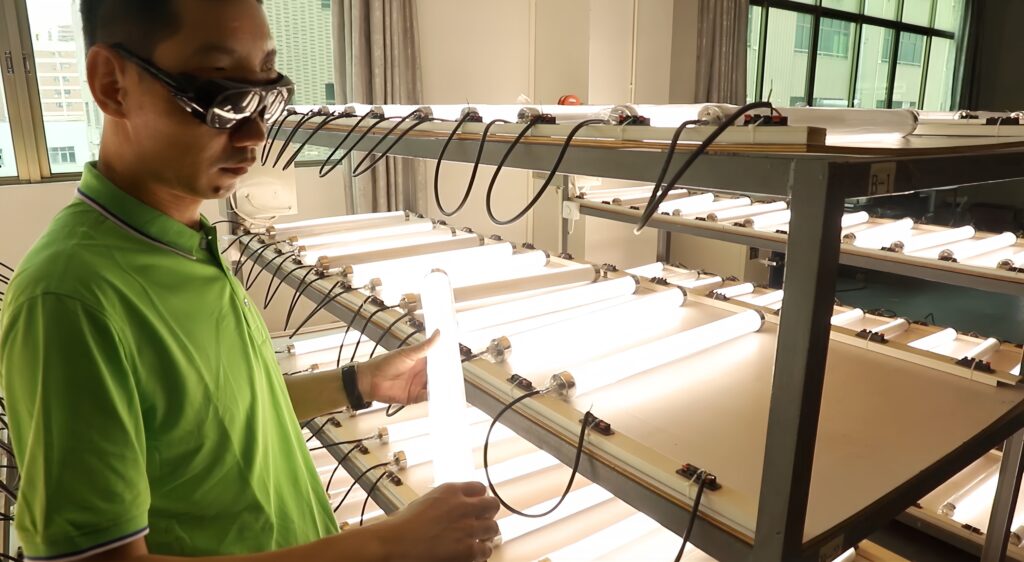
From our experience in project delivery, the product is only half the equation. The other half is the manufacturer. A great product from an unreliable supplier is a risky bet. If something goes wrong, will they be there to support you? Do they have the technical expertise to help you when you run into an issue during installation? A strong partnership with your supplier is key to a successful project. They should act as your technical partner, not just a vendor.
When you evaluate a supplier, you are evaluating your project’s risk. Go beyond their marketing claims and ask specific, technical questions.
A trustworthy supplier will welcome these questions. They will have engineers available to provide detailed, confident answers. They will be transparent about their processes and be able to provide documentation to back up their claims.
If a supplier is evasive, gives vague answers, or can’t provide technical documentation, it’s a major red flag. This often means their product is a generic, off-the-shelf item with no specific engineering for demanding environments.
Choosing a supplier who invests in engineering, testing, and quality control is an investment in your project’s success.
MANI provides configurable LED tri-proof tubular lighting solutions for parking garages, car parks, industrial areas, corridors, and other demanding environments.
Depending on the project requirements, we can support different tube diameters, housing materials, mounting methods, wiring methods, color temperatures, beam angles, dimming options, sensor control, emergency compatibility, and IP-rated structures.
For parking garage applications, our team can help evaluate key factors such as humidity risk, installation height, lighting layout, impact risk, maintenance requirements, and control strategy. We can also provide product information, IES files, and suitable configuration suggestions based on your project conditions.
Choosing LED tri-proof lights for a parking garage should not be based only on wattage, lumen output, IP rating, or unit price. The right solution should match the real environment, including moisture, dust, chemicals, impact risk, operating hours, and maintenance needs.
Buyers should also consider the total cost of ownership. A reliable fixture with higher efficiency, stronger materials, better sealing, and a lower failure rate can reduce energy costs, maintenance work, replacement expenses, and long-term project risk.
If you are working on a parking garage or car park lighting project, MANI can help recommend a suitable LED tri-proof lighting configuration with long-term performance and TCO in mind.
The tubular housing is one of the most visible parts of a tubular luminaire, but its role goes far beyond
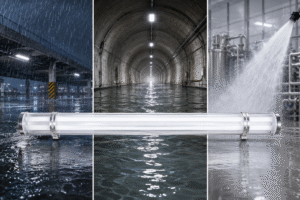
When specifying tubular lighting for a commercial or industrial project, one specification appears on almost every datasheet: the IP rating.
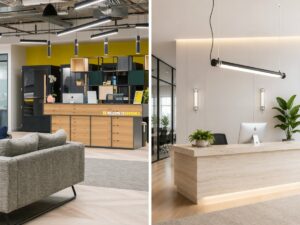
At almost every lighting exhibition we attend, someone eventually asks the same question. “Isn’t tubular lighting just another type of
Hi, I’m Paige, the author of this post. MANI Lighting has over 20 years of experience in lighting, covering product design, mold development, material selection, production improvement, and project evaluation. If you need customized lighting products, LED tri-proof tubular lights, ceiling lights, or project-based lighting solutions, feel free to contact me.