A lighting designer once asked me which tubular LED fixture would be suitable for a boutique hotel corridor. Before recommending a model, I asked several questions first:
What kind of visual effect does the space need?
Will the fixture be used as functional lighting, decorative lighting, or both?
Is the installation surface a ceiling, wall, suspension system, or custom structure?
Does the project require sensor, dimming, emergency lighting, or a special surface finish?
These questions are more useful than simply asking for a “professional-grade” fixture.
In architectural and commercial lighting projects, tubular LED luminaires are often selected not only for brightness, but also for appearance, proportion, installation detail, and long-term reliability. A good fixture should match the design concept, the site condition, and the technical requirements of the project.
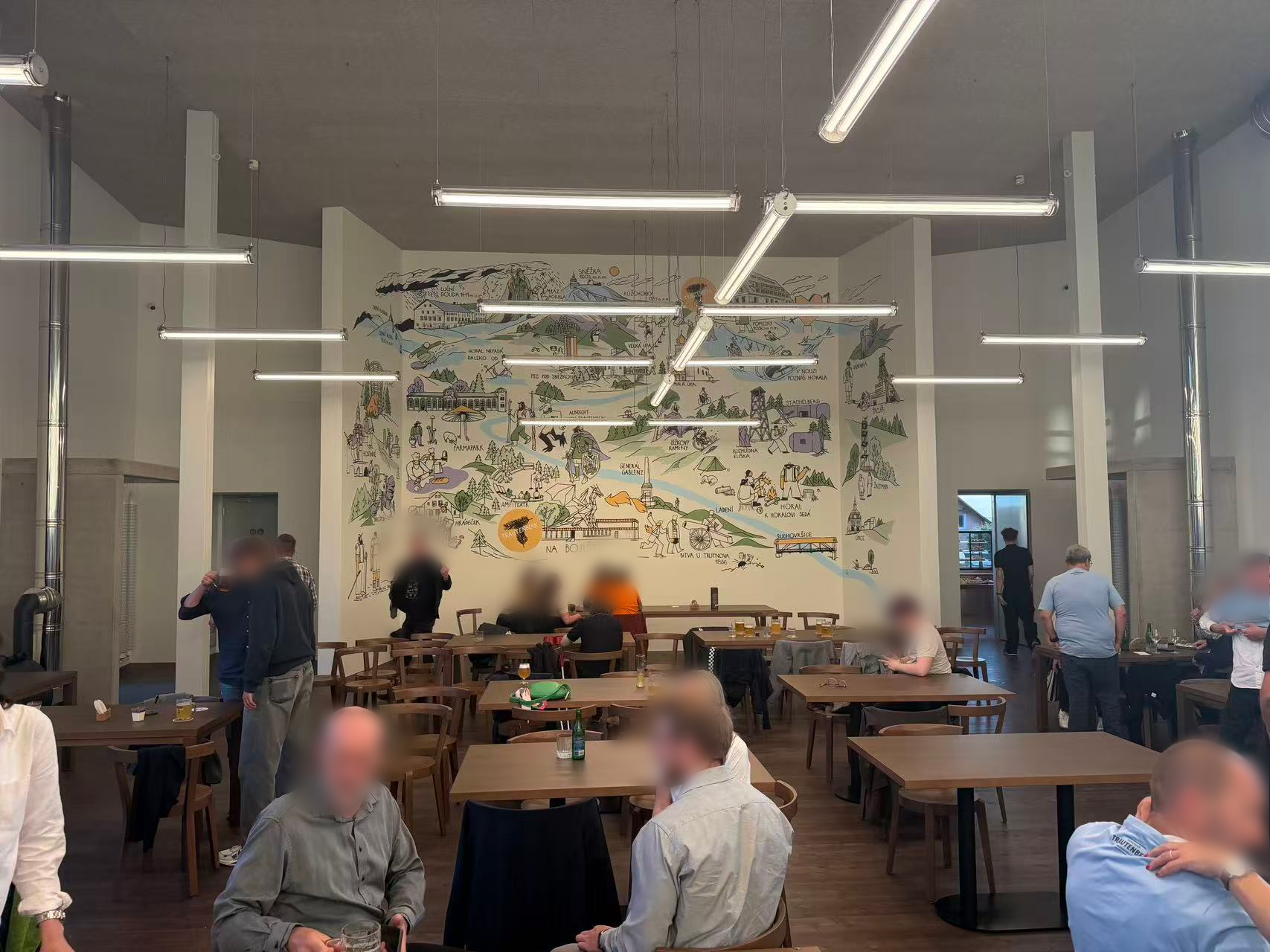
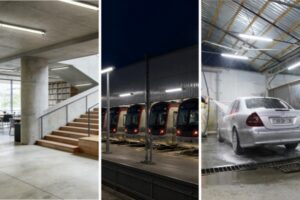
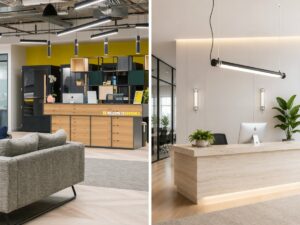
This article explains the key points to check before specifying architectural tubular LED lighting for hotels, restaurants, retail spaces, office areas, public corridors, galleries, and other commercial projects.
1. “Professional-Grade” Is Not a Real Specification
Many buyers use words such as “professional-grade,” “high quality,” or “premium” when describing the lighting they need. These words are understandable, but they are not enough for product selection.
For architectural tubular LED lighting, “professional-grade” should be translated into details that can actually be checked:
- What diameter and length are suitable for the space?
- Should the light be single-sided, double-sided, or 360° emitting?
- What material is required: PC, PMMA, glass, aluminum, or stainless steel?
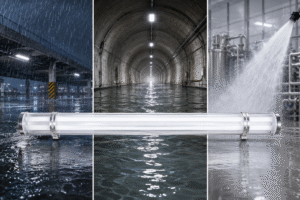
- What IP and IK rating does the installation environment need?
- What color temperature and CRI are required?
- Does the project need DALI, 0-10V, TRIAC, Tunable White, or ON/OFF control?
- Does the fixture need a special surface finish or customized mounting accessory?
A luminaire can look beautiful in a catalog image, but if the size is not proportional to the space, the surface finish does not match the interior design, or the mounting detail is not compatible with the site, the final result may still be disappointing.
Professional architectural lighting is not only about the product itself. It is about how the fixture works together with the space.
2. Define the Lighting Effect Before Choosing the Fixture
For architectural tubular lighting, the first question should not always be “how many watts?” A better question is: what visual effect do you want to create?
Tubular LED luminaires can be used in different ways:
| Lighting Purpose | Suitable Direction |
|---|---|
| General ambient lighting | Diffused tubular light with soft, even output |
| Decorative feature lighting | 360° emitting tube, patterned tube, or special finish |
| Wall or ceiling accent | Single-sided or directional light distribution |
| Corridor or public area lighting | Continuous linear arrangement with clean mounting |
| Hospitality and restaurant lighting | Warm CCT, decorative surface, lower glare |
| Commercial project lighting | Balanced efficiency, appearance, and maintenance |
For example, a hotel corridor may need a warm and comfortable atmosphere. A retail space may need a cleaner and brighter visual effect. A restaurant may prefer lower glare and decorative details. A public corridor may need stronger durability and easier maintenance.
The same tubular shape can create very different results depending on diameter, length, diffuser material, light distribution, and installation method.
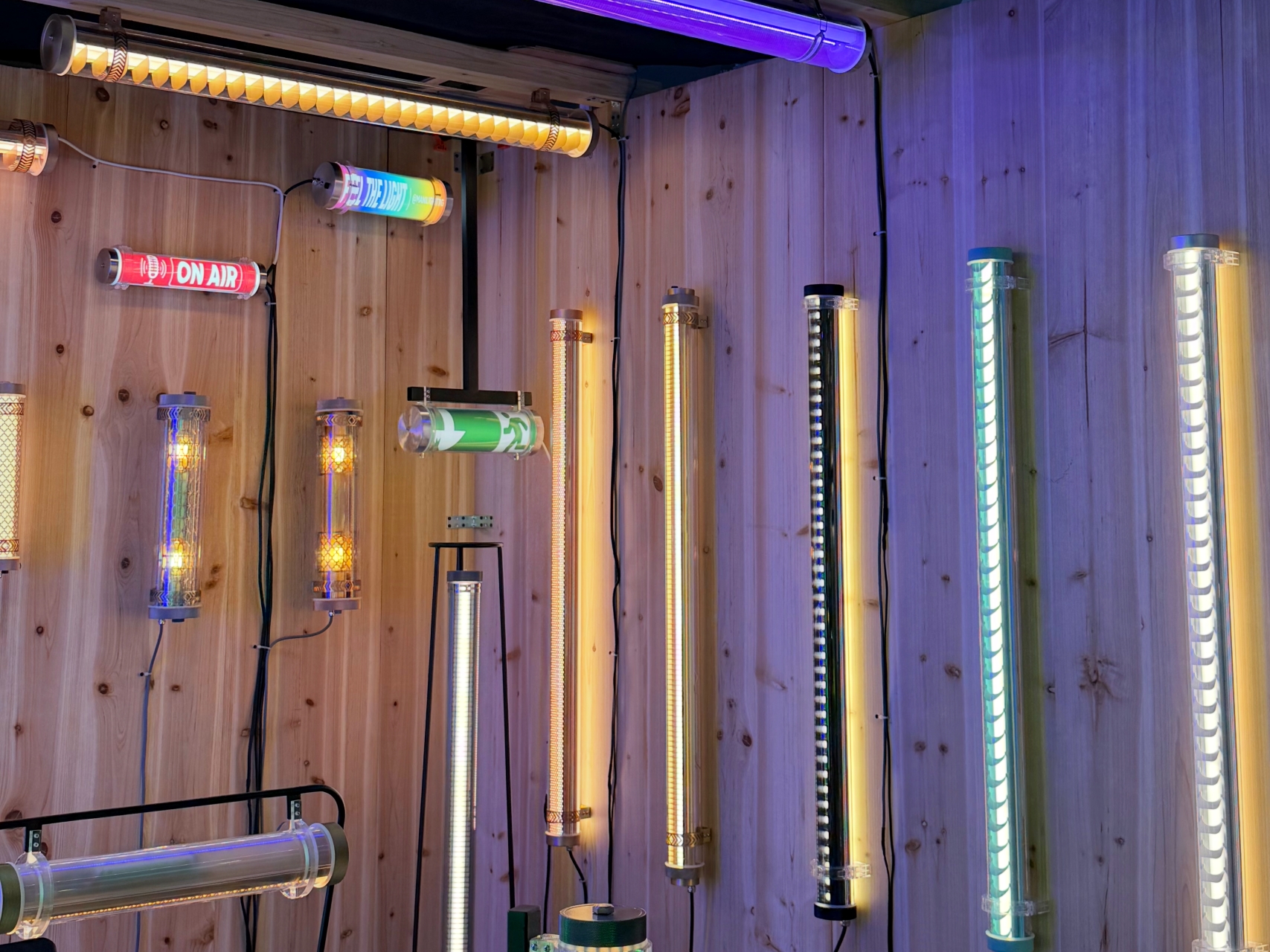
This is why fixture selection should begin with the design intention, not only the technical datasheet.
3. Choose the Right Material for the Application
Material selection affects appearance, durability, weight, optical performance, and cost.
For tubular LED lighting, common material options include PC, PMMA, glass, aluminum, and stainless steel. Each material has different advantages.
| Material | Main Advantage | Common Use |
|---|---|---|
| PC tube | Strong impact resistance, lightweight | Public areas, commercial projects, semi-outdoor applications |
| PMMA tube | Good optical appearance and light transmission | Decorative and architectural applications |
| Glass tube | Premium appearance, better chemical and temperature stability | High-end projects, special industrial or food-related areas |
| Aluminum components | Flexible surface finish and structure | End caps, louvers, brackets, decorative parts |
| Stainless steel components | Better corrosion resistance and stronger structure | Public areas, outdoor or demanding environments |
For architectural projects, material is also part of the design language. A transparent tube, frosted tube, patterned inner structure, louver design, perforated surface, or metallic end cap can completely change the visual impression of the fixture.
A project that focuses on clean minimalism may prefer simple clear tubular lighting. A hospitality project may prefer warmer CCT and decorative details. A public area may need stronger anti-impact performance and more secure mounting.
When the installation environment has higher dust, water, or impact risk, IP and IK ratings should also be confirmed. IP ratings are used to classify protection against dust and water ingress, while IK ratings are used to classify protection against external mechanical impact. [1][2]
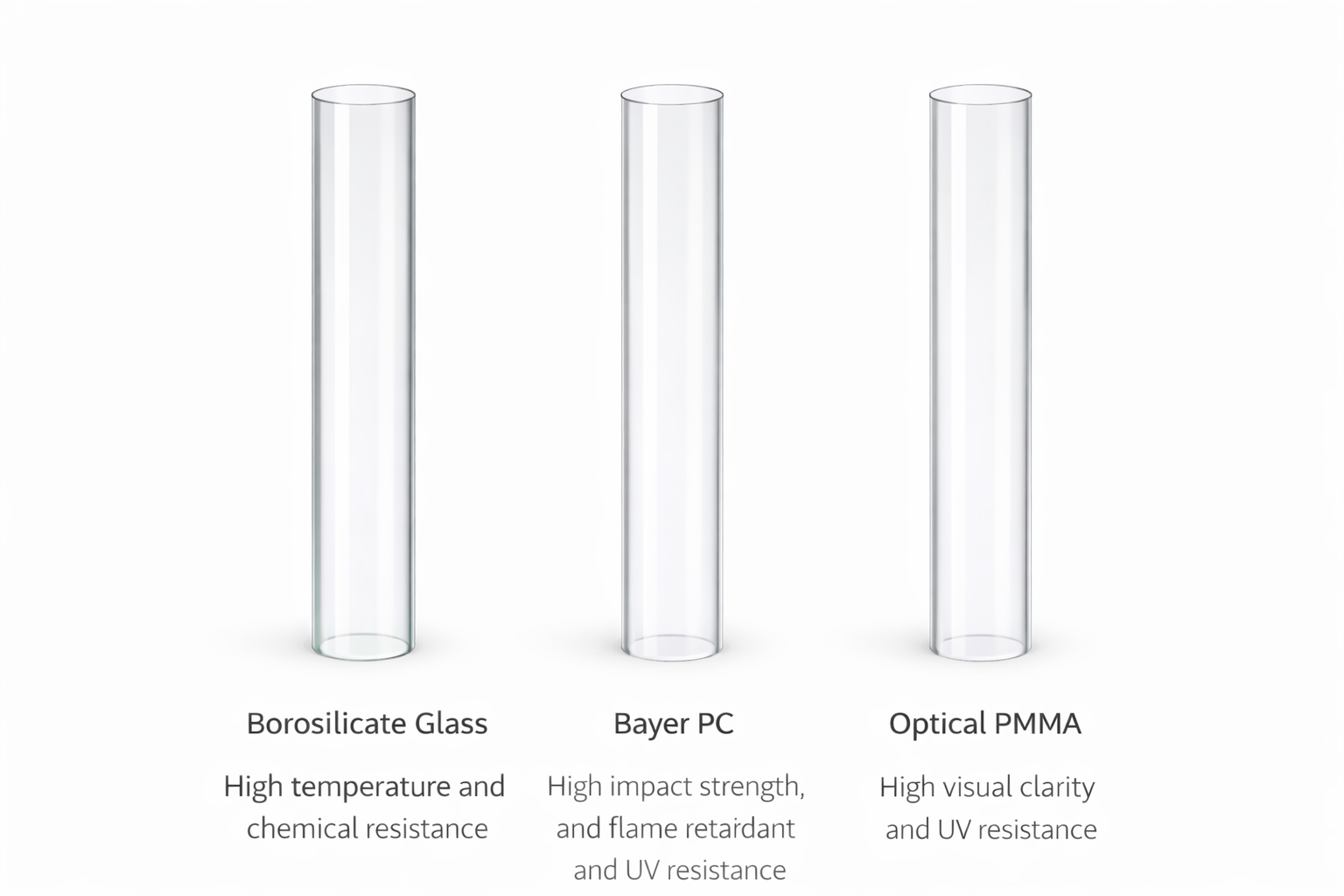
The right material should match both the environment and the design style.
4. Confirm the Installation Method Early
Installation detail is one of the most important parts of architectural tubular lighting.
A tubular fixture may be ceiling-mounted, wall-mounted, suspended, vertically mounted, horizontally mounted, or integrated into a custom structure. The same luminaire body may require different accessories depending on the site.
Before production, these details should be confirmed:
| Installation Detail | Why It Matters |
|---|---|
| Ceiling, wall, or custom structure | Determines bracket and fixing method |
| Surface-mounted or suspended | Affects cable length, accessories, and appearance |
| Horizontal or vertical installation | Affects mounting position and visual proportion |
| Single fixture or continuous arrangement | Determines wiring and connection design |
| Visible or hidden cable | Affects final architectural appearance |
| Standard or customized bracket | Affects production lead time and cost |
For example, a suspended tubular light in a commercial lobby needs a clean cable and fixing system. A wall-mounted fixture in a hotel corridor may need a more refined bracket. A vertical decorative tube may require stronger end-fixing and cable management. A public area may need anti-removal clips or stronger mounting accessories.
Good architectural lighting is not only about the fixture looking good by itself. It also needs to look good after installation.
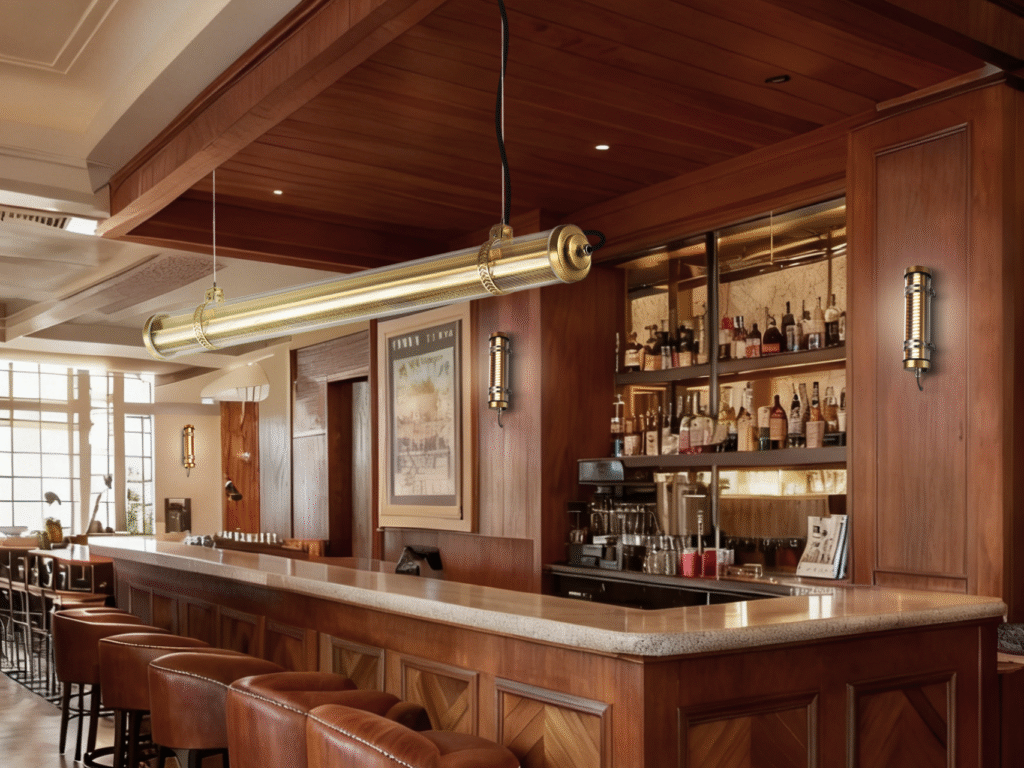
This is why installation confirmation should happen before the order is placed, especially for customized tubular lighting.
5. Match the Control Method to the Project System
Dimming and control should be confirmed according to the project system.
Architectural tubular LED fixtures can be made with different control options, such as ON/OFF, TRIAC, 0-10V, DALI, sensor control, or emergency function. But these options are not interchangeable.
| Control Option | Suitable Situation |
|---|---|
| ON/OFF | Simple commercial or decorative applications |
| TRIAC dimming | Hospitality, residential-style commercial spaces, decorative lighting |
| 0-10V dimming | Zone-level control for commercial and project lighting |
| DALI / DALI-2 | Smart buildings, office projects, lighting control systems |
| Sensor control | Corridors, public spaces, energy-saving applications |
| Emergency function | Public buildings, corridors, exits, and regulated project areas |
If the project already uses a DALI control system, the fixture should use a compatible DALI driver. If the project uses 0-10V control, the fixture should be designed with a 0-10V driver. The outside appearance of the fixture may be similar, but the internal driver and wiring will be different.
DALI is a digital lighting-control protocol, while 0-10V is a separate control interface method for LED drivers and lighting controls. [3][4]
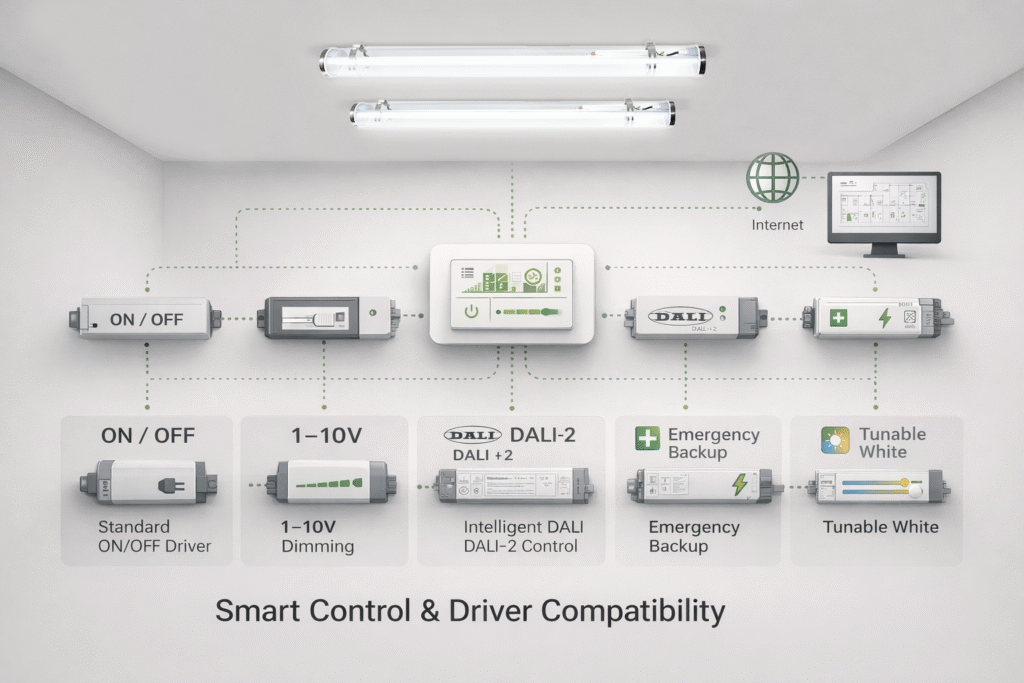
The best control option is not always the most complex one. It is the one that matches the project requirement, budget, installation condition, and maintenance plan.
6. Consider Customization and Lead Time
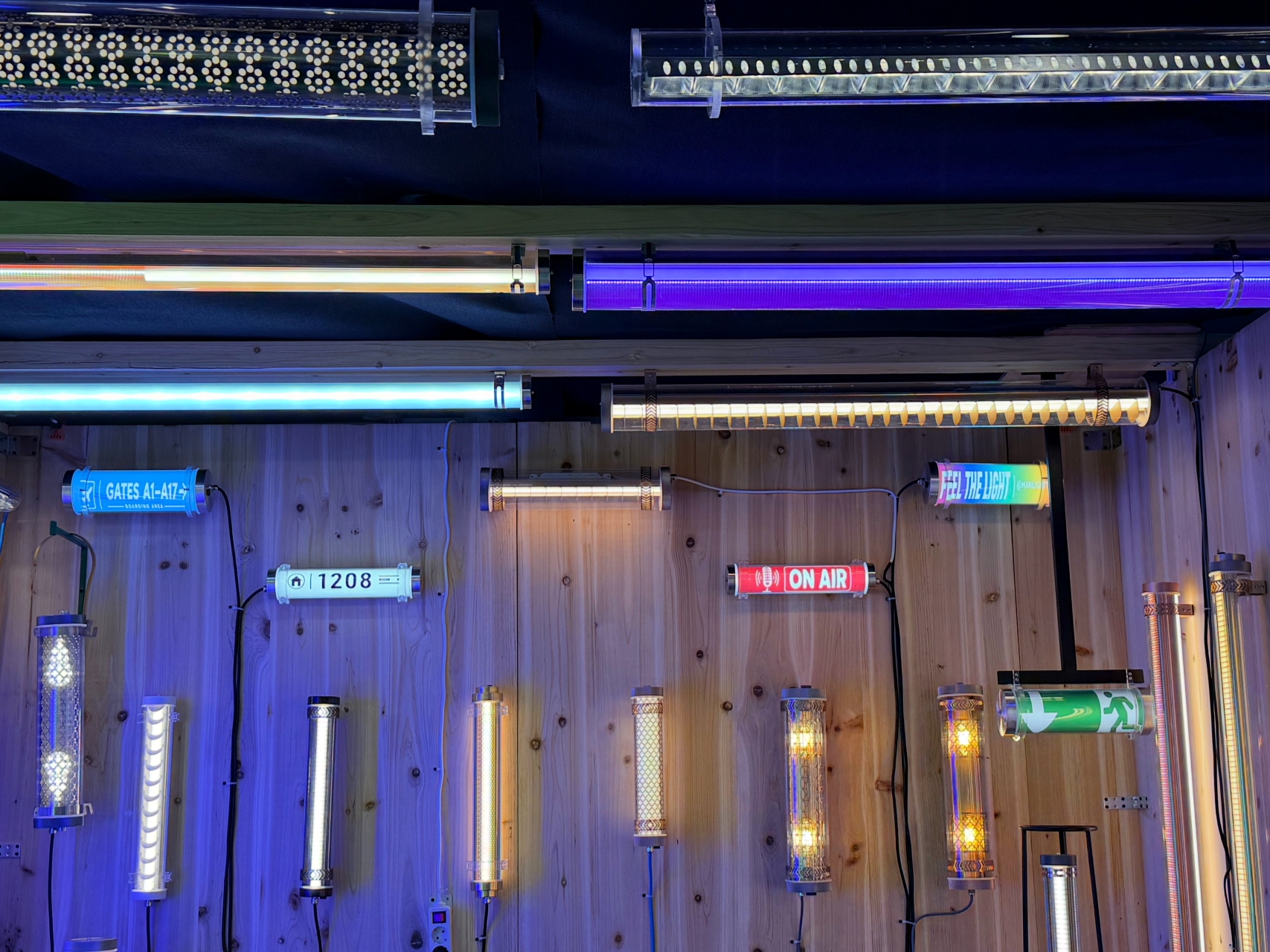
Architectural tubular lighting projects often require customization.
Common customized details include:
- Diameter
- Length
- Surface color
- End cap material
- Light distribution
- CCT
- CRI
- Dimming method
- Mounting accessories
- Cable length
- Logo or packaging
- Special structure or decorative element
Customization makes the fixture more suitable for the project, but it also requires more confirmation before production.
| Custom Requirement | What Should Be Confirmed |
|---|---|
| Diameter and length | Confirm space proportion, installation method, and required output |
| Surface color | Confirm RAL color, finish, and coating requirement |
| End cap and accessories | Confirm material, appearance, mounting method, and structure |
| Dimming or emergency function | Confirm driver, wiring, control system, and testing requirement |
| Special decorative structure | Confirm drawing, sample, optical effect, and production feasibility |
| Logo or packaging | Confirm artwork, label, box design, and order quantity |
For example, a special RAL color may need coating arrangement. A non-standard length may require material preparation. A custom bracket may need mechanical confirmation. A DALI driver, emergency kit, or sensor function may need component matching and testing.
For this reason, custom architectural tubular lighting should not be treated like a standard stock item. It is better to confirm the full specification early, especially when the project has a fixed installation schedule.
7. What Information Should Be Prepared Before Requesting a Quote?
To recommend a suitable architectural tubular LED fixture, a supplier needs more than just a product photo.
It is helpful to prepare the following information:
- Project type
- Application area
- Indoor, semi-outdoor, or outdoor environment
- Required visual effect
- Diameter and length
- CCT and CRI
- Material preference
- IP and IK requirement
- Mounting method
- Control method
- Quantity
- Surface finish requirement
- Project schedule
With this information, the supplier can recommend a more suitable solution and provide a more accurate quotation.
A good supplier should not only ask for quantity. They should understand how the fixture will be used, how it will be installed, and what result the designer or project owner wants to achieve.
Conclusion
Choosing professional architectural tubular LED lighting is not only about brightness or price. It requires a balance between design effect, material, installation method, control system, protection rating, and customization feasibility.
For hotels, restaurants, retail spaces, office areas, public corridors, galleries, and other commercial projects, the right tubular LED fixture should support both the visual concept and the practical installation requirements.
At MANI Lighting, we provide architectural, commercial, and industrial tubular lighting solutions with options for PC, PMMA, and glass tubes, different diameters and lengths, single-sided, double-sided, and 360° light distribution, customized mounting accessories, surface finishes, DALI, 0-10V, TRIAC, sensor, emergency function, and OEM/ODM customization.
If you are working on an architectural or commercial lighting project, you can send us your application area, installation method, required size, control system, and design direction. Our team can help you check the specification and recommend a suitable tubular lighting solution before production starts.
References
[1] IEC, “Ingress Protection (IP) Ratings.”
[2] VDE Verlag, “DIN EN 62262 VDE 0470-100: Degrees of protection provided by enclosures against external mechanical impacts.”
https://www.vde-verlag.de/standards/0400502/din-en-62262-vde-0470-100-2022-02.html
[3] DALI Alliance, “DALI: Digital Addressable Lighting Interface.”
[4] NEMA / ANSI C137.1, “0-10V Dimming Interface for LED Drivers, Fluorescent Ballasts, and Controls.”